The white wines
Pressed off the skins, fermented cold, built on acid instead of tannin — and exactly what a ninety-degree Temecula afternoon is asking for.
Nearly every wine grape on earth — Syrah included — presses out the same pale juice. Color lives in the skins, and a white is simply a wine that never met them: the clusters go to the press on arrival, the juice runs off green-gold and clear, and everything afterward is devoted to keeping it fresh. No skin soak, no tannin, none of the grip that makes a red a red.
What replaces tannin is acidity. White juice ferments cold, usually in steel, because slow, cold ferments keep the aromatics a warm tank would blow off — the apricot in a Viognier, the cut grass in a Sauvignon Blanc. Acid then does the structural work: the fresh, mouth-watering line that keeps a white standing up straight. The valley’s hot days ripen the fruit; its cool marine nights keep that line in the grapes.
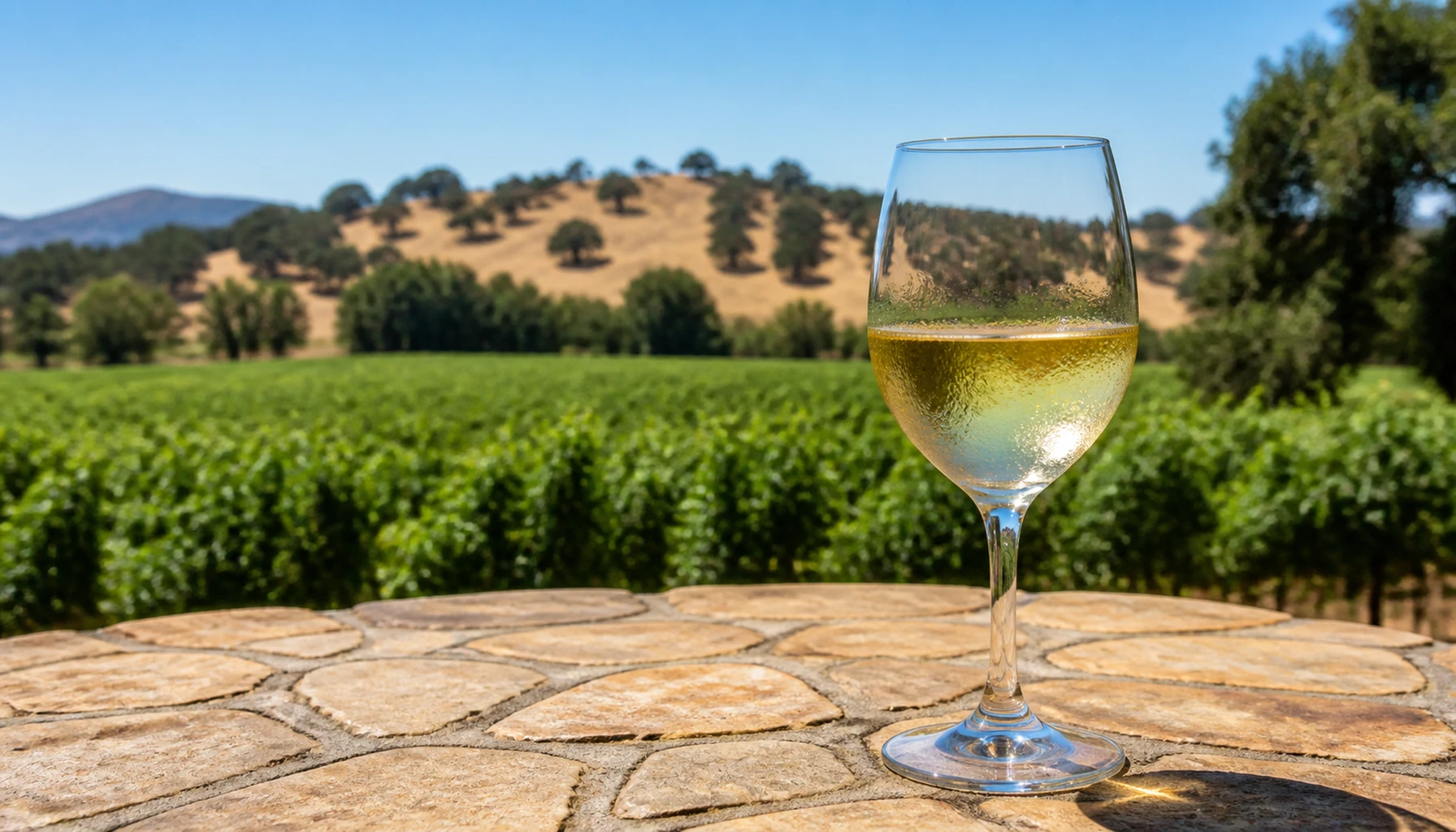
Which is why the whites here are not a courtesy pour — they are equipment. Temecula runs hot by mid-afternoon, and the ocean air that slips through the Rainbow Gap answers to the vines, not to your two o’clock patio table. A cold glass is the one part of the valley’s climate you can hold. And nearly every flight in the valley opens pale. (Nearly — Wiens famously skips the white-wine hedge and pours big dark blends without apology. Everywhere else, the day starts cold.)
The Rhône whites
The grapes behind half the valley’s reds have pale siblings — the flagship white among them.
Viognier
If Temecula has a flagship white, this is it. Viognier is the great perfumed grape of the northern Rhône — apricot, honeysuckle, white peach, a texture nearer silk than citrus — and it nearly vanished from its home hillsides in the middle of the last century before the wine world thought better of it. It likes heat and needs full ripeness: picked timid it tastes of very little, left to hang it becomes the most generous white in the room, which makes this valley close to ideal employment. It shows up on nearly every list here, and smelling it is most of the point — get your nose into the bowl and you will understand why the valley leads with it. Rhône-leaning houses are the natural hunting ground: Miramonte pours Rhône varieties on a hillside terrace, and keeps pouring after most rooms wind down.
Roussanne & Marsanne
The Rhône’s other whites travel as a pair, in Temecula as at home. Marsanne is the broad-shouldered one — weight, honeydew, beeswax, a faint almond bitterness at the finish — and Roussanne is the nervy one: pear skin, herbal tea, and the acidity its partner forgot to pack. Blended, each covers the other’s gaps, which is why the great white blends of Hermitage are built on them. These are texture wines more than fruit wines, and on valley lists they stand just behind Viognier — sometimes named, sometimes working quietly inside a white blend. When a flight offers one, say yes — the sleeper pick among Temecula whites.
Chardonnay & Sauvignon Blanc
One generous, one sharp — the two whites everybody arrives already knowing.
Chardonnay
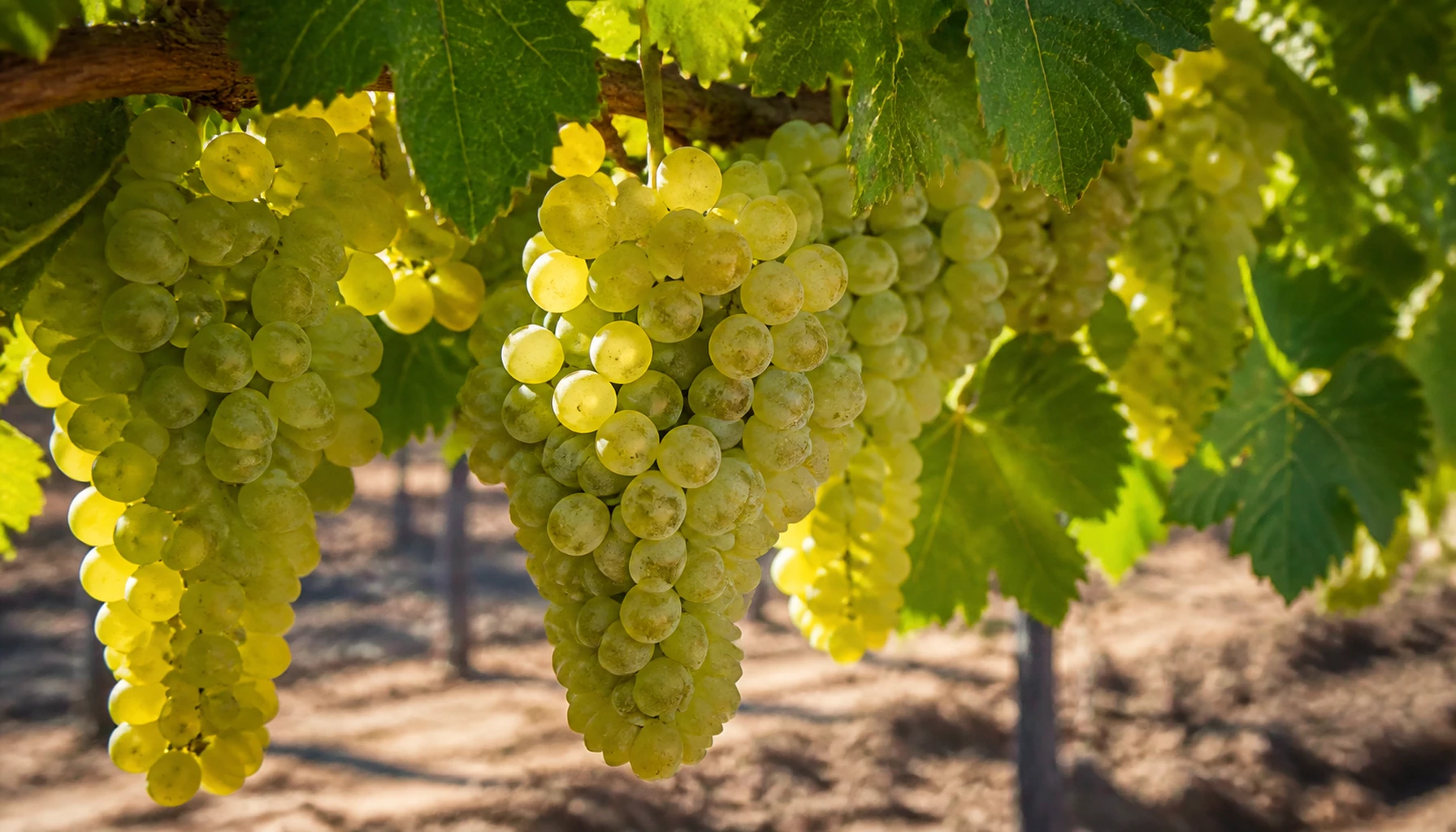
Chardonnay is the classic that never left, and the warm vintages treat it kindly: generous, round, ripe stone fruit and melon, ready young. Expect the sunny school rather than the flinty one, though houses differ on the finish work — steel keeps it brisk and orchard-crisp, while barrels and a soft malolactic turn add the cream-and-toast register that people either adore or blame the entire grape for. Ask which style is in the glass; most strong opinions about Chardonnay turn out to be opinions about oak. For the history poured alongside it, Callaway — the valley’s first commercial winery, since 1974 — is the place to start.
Sauvignon Blanc
Sauvignon Blanc plays the supporting cast in Temecula, and plays it well. It is the sharpest tool on any white list — cut grass, grapefruit pith, a green line of acid that lands like a window thrown open in a warm room — and it does the jobs no other grape here can: resetting a palate between richer pours, standing up to anything that came from the sea, being the first genuinely cold thing after the parking lot. It is not on every list, but a handful of houses keep one. If it turns up on a flight, take the flight.
The Italian whites
The houses that built their identity on Italian grapes did not stop at the reds.
Vermentino
Temecula’s Italian streak usually gets told through Sangiovese and Montepulciano, but the logic that brought those grapes to the granite — plant what treats heat as home — holds just as well in white, and Vermentino is the proof. On its home coasts — Sardinia, Liguria, Corsica under the name Vermentinu — it grows within sight of salt water and tastes as though it remembers: lemon pith, crushed dry herbs, a saline snap, and a pleasantly bitter almond note that keeps it honest — built for exactly the weather Temecula supplies, and thriving here. Cougar planted its vineyard for the Italian grapes and declined to hedge; Mount Palomar has leaned Italian on some of the valley’s oldest plantings, in the ground since 1969; and Robert Renzoni brings four generations of Italian instinct to the De Portola trail. Between the three you can drink your way to Sardinia without leaving the valley.
Pinot Grigio rounds out the bench — light, dry, pear-and-lemon, the easiest yes in the white aisle — and a handful of the Italian-leaning houses pour one (the grape itself, oddly, ripens grayish pink — more proof the skins go unconsulted).
Cold, but not ice-dead
The one white-wine decision left in your hands — and the refrigerator gets it wrong.
Real chill matters — warm white goes slack and boozy. But straight-from-the-fridge is its own mistake: in the upper thirties, a Viognier you chose for its perfume goes nearly mute, and you have paid tasting-room prices for a glass of cold. The target is cellar-cool, ten minutes out of the refrigerator; in the glass, simply start drinking and let it warm into its aromatics. The last third of a pour always smells like more than the first.
| Fridge-cold | Upper 30s — refreshing and nearly silent; fine for a hot lawn, a waste of anything aromatic |
|---|---|
| Cellar-cool | 45–50°F, about ten minutes out of the fridge — where Viognier, Roussanne, and good Chardonnay actually speak |
| In the tasting room | Poured at the right temperature for you — your only job is to hold the stem, not the bowl, so your hand doesn’t undo the cellar’s work |
The whites are also your opening act. Every flight in the valley runs whites toward reds and dry toward sweet, because acid wakes a palate up and tannin wears it out — so taste them seriously while your senses are still fresh. They are the valley’s own lunch prescription, too: an hour up the hill at Falkner, a window table and something pale, has rescued more than one over-ambitious itinerary. Prefer to open the day even paler? Three houses make méthode-champenoise sparkling on site — South Coast among them — but bubbles get a page of their own.
Featured videos
Whites that hold their nerve in the heat — the varietals the valley picks before dawn, explained by the people who grow them.