Rosé
Pink is not a grape and not a compromise. It is a method, a timer, and — on a Temecula afternoon — frequently the smartest glass on the list.
Start with what rosé is not: red wine cut with white. Nearly every red grape the valley grows — Syrah, Grenache, Sangiovese, Zinfandel — bleeds clear juice when you press it. All of the color, and most of the grip, lives in the skins. Pink happens when a winemaker lets juice and skins sit together for a matter of hours instead of a matter of weeks, then pulls them apart. Rosé is a red wine, interrupted on purpose.
That one fact explains everything else on this page: why the good ones are pale and bone dry, why the famous American one is sweet, and why a wine this light on its feet belongs in a valley whose summer afternoons run to ninety degrees.
How rosé is made
Every rosé is a question of when to stop. Winemakers answer it one of two ways.
The short soak
The deliberate route: pick red grapes, crush them, and let the juice steep on its skins for somewhere between a couple of hours and a day. The winemaker hovers over the tank like a photographer over a developing print, and the moment the juice hits the right shade — onion skin, coral, watermelon — off it comes, to ferment cold and slow the way a white wine does. Everything about the result is chosen: the paleness, the freshness, the snap.
The bleed — saignée
The opportunist’s route. A tank of Grenache or Syrah destined to become red wine — the same tanks behind the valley’s GSM blends — gives up a portion of its pale juice early. That bled-off juice (saignée is French for “bled”) ferments into rosé, while the red left behind, now sitting on a higher ratio of skins, turns out darker and more concentrated. One tank, two wines, nobody loses. Saignée pinks tend to run a shade deeper and a touch grippier than short-soak ones.
Dry vs. sweet
Two very different wines share the color. Know which one a list means before you commit to a bottle of it.
The sweet one has the better origin story. In the mid-1970s a California cellar had a pale Zinfandel ferment stall out partway, leaving natural sugar behind — and the accident sold so well it became a category. White Zinfandel went on to introduce a generation of Americans to wine, and since Zinfandel is one of the grapes that never left the valley, its pink, easygoing descendants still turn up on lists here.
The modern dry style is the opposite creature: Provence-pale, crisp, and completely without sugar — strawberry and citrus peel up front, something like wet stone underneath, and a dry, mouthwatering finish that asks for food. In Temecula it is usually made from Grenache, Sangiovese, or Syrah, which is convenient, because those are grapes this valley already grows well.
Telling them apart from the bar stool is mostly a reading exercise. A wine called White Zinfandel or blush will be sweet; a wine called rosé of some red grape will almost always be dry. Color is only a hint — pale usually means dry, but nobody regulates it — and the pourer’s description settles anything the label leaves open.
Rosé in the valley
The valley runs hot, the patios run long, and pink wine was practically engineered for the gap between the two.
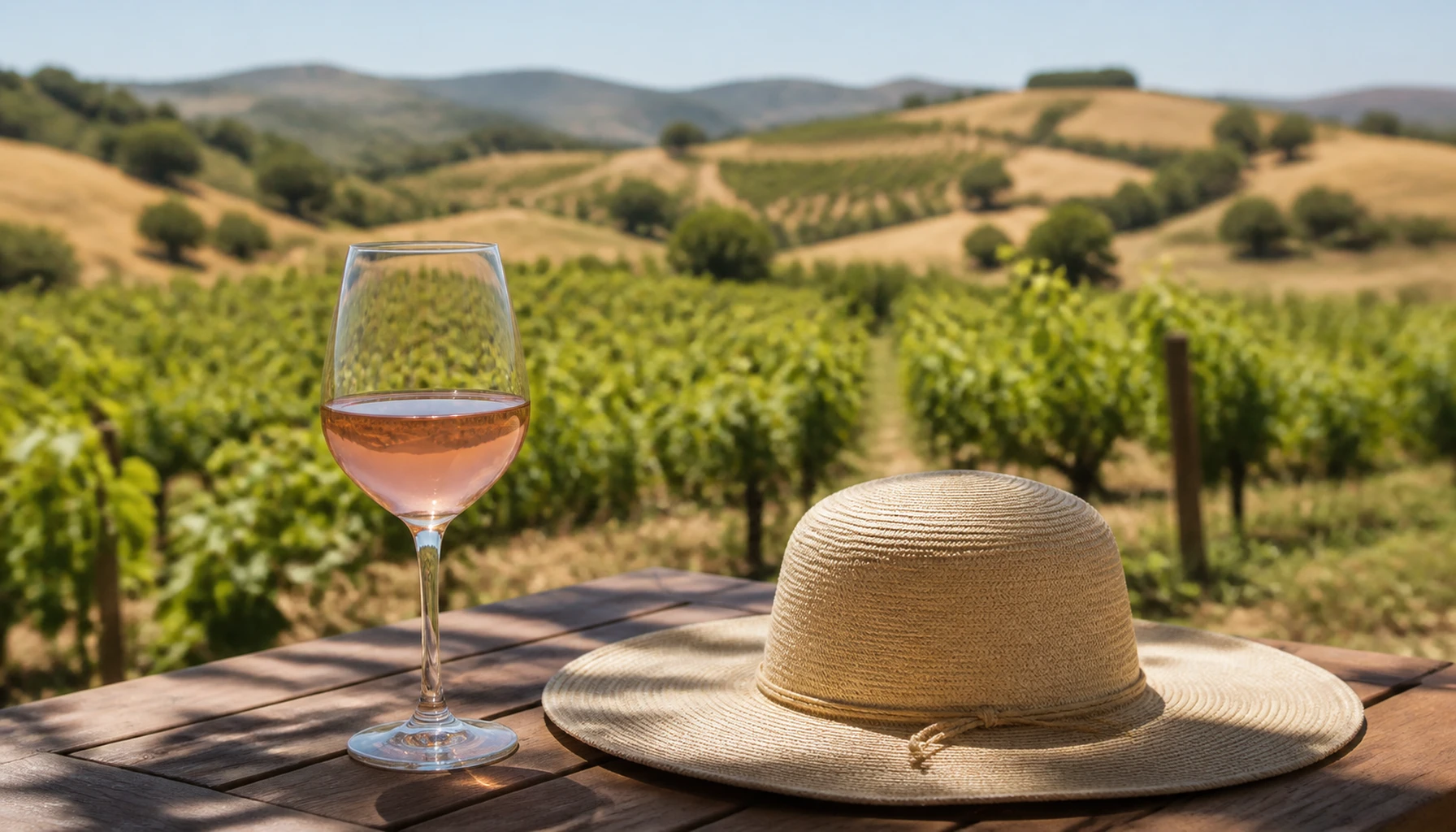
By two o’clock on a summer Saturday, Temecula is posting 90-degree numbers, and the marine air that cools the valley through the Rainbow Gap doesn’t finish the job until later in the afternoon. A big tannic red at that hour is work. A rosé, poured properly cold — straight from the ice bucket, condensation on the glass — is the wine that actually fits the weather. In a flight it sits where it belongs, after the whites and before the reds, and on a hot day it is the pour people go back to.
You will find a pink glass on lists all over the valley, most often a Grenache, Sangiovese, or Syrah. Where to drink it is really a question of patios: Miramonte pours Rhône varieties on a hillside terrace that stays lively after most rooms wind down; Bel Vino’s patio sits above the valley floor and earns its last two hours before close; Bottaia runs a summer pool club, which is about as rosé-shaped as a setting gets; Wilson Creek has the lawns; and Danza del Sol offers mature shade on the quiet southern trail. Order the coldest pink thing on the list and let the afternoon do the rest.
Featured videos
Rosé done properly — picked for it, not left over from something else. The case for the valley’s summer pour.