The wines of the valley
Temecula never hung its hat on one famous grape. It set the whole Mediterranean table instead — and the tasting lists read like it.
Napa married Cabernet and the Willamette bet everything on Pinot Noir. Temecula did neither. A warm granite valley at 1,500 feet, cooled every afternoon by ocean air through the Rainbow Gap, turns out to suit an entire shelf of grapes: Rhône reds and whites, the Italian and Spanish varieties a handful of houses — Cougar, Robert Renzoni, Mount Palomar — built their whole identity on, the classics that never left, méthode-champenoise sparkling made properly on site, patio rosé, and the sweet bottles every flight saves for last.
That range is the valley’s charm and the first-timer’s navigation problem: fifty-some wineries and no single famous grape to steer by. This section is the map. Five short pages, one per family of wine — what it is, what it tastes like here, and which doors pour the proof.
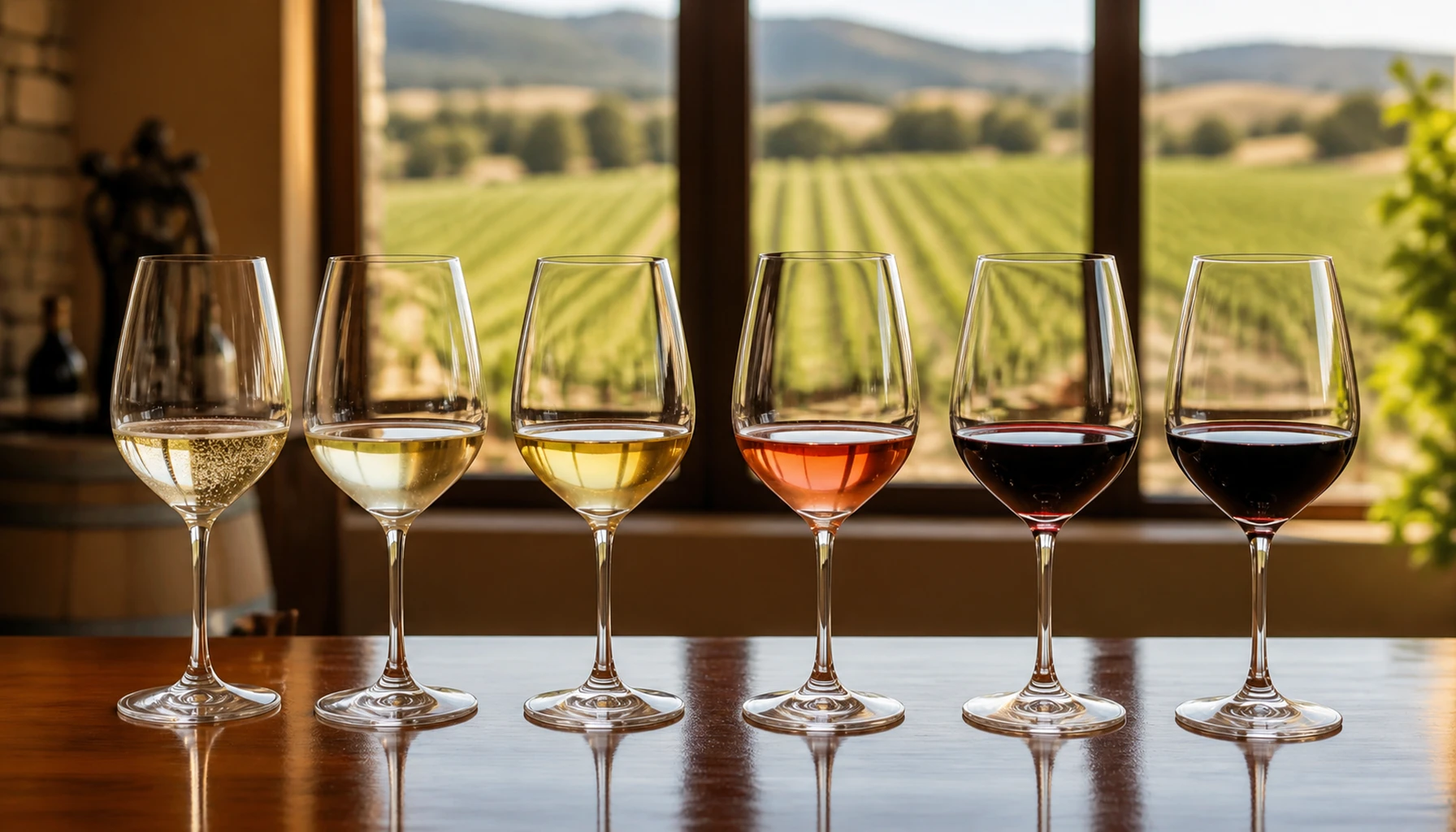
The five families
Every pour in the valley belongs to one of five families. Learn the five and no tasting list will ever look long again.
-
Red wines
The center of gravity
Syrah and the GSM blends half the valley makes, Tempranillo that wins more than its share, and a whole Italian wing. Warm vintages make them dark-fruited, generous, and ready early — nobody here asks you to wait a decade.
-
White wines
Viognier first
Viognier is the flagship, with Roussanne and Marsanne behind it and Chardonnay still holding its corner. In a valley of ninety-degree afternoons, the whites are not a warm-up act — they are survival gear.
-
Rosé
A method, not a grape
Pink is a technique — red grapes, a brief acquaintance with their skins, a cold ferment. The modern dry style fits a Temecula patio so well it might as well have been drawn for one.
-
Sparkling wines
Bubbles before noon
Three houses make méthode-champenoise sparkling on site, and starting the day with bubbles is a legitimate local tradition. The almond sparkling is a phenomenon unto itself.
-
Sweet & dessert wines
The last pour
Late-harvest and port-style bottles close most flights in the valley, and the valley takes closing seriously. Skip the last pour and you have walked out before the encore.
How a tasting list is organized
Every flight in the valley runs the same direction: whites before reds, dry before sweet, light before heavy. It is not etiquette — it is engineering.
Your palate is equipment, and equipment fatigues. Tannin numbs it and sugar recalibrates it, so a tasting list is sequenced to keep the instrument honest as long as possible: crisp, quiet wines while your senses are sharpest, the big dark reds once you have your bearings, and the sweet pour dead last — because after sugar, everything dry tastes like a grudge.
Run the order backward and a lovely Viognier reads as thin water with regrets. Run it forward and each wine gets a fair hearing. Sparkling is the flexible one: its acidity wakes the palate up, which is why bubbles so often open the day — and why sweet closes it.
Most rooms pour five or six wines in this order for roughly $25–$45 a person, and the fees, reservations, and fifteen-second tasting ritual all have their own page — the tasting guide covers the mechanics of the day.
The valley’s signatures
Fifty wineries, dozens of grapes, one shortlist. Order these when you see them and you will taste the valley’s argument at full strength.
Syrah
Arguably the valley’s signature red: dark, peppery, and entirely at home on decomposed granite. Ponte’s estate version runs with the valley’s best, Doffo pours it with small-lot intensity, and Miramonte has made Rhône varieties the house cause.
Viognier
The flagship white — apricot and honeysuckle up front, real texture behind — and the Rhône grape that handles the heat most gracefully. It shows up on nearly every list in the valley, which is its own kind of verdict.
Tempranillo
Spain’s great red may be the single most rewarded grape in the valley; Ponte’s and several De Portola estates’ versions are the proof. If a list carries one, that is your fourth pour sorted.
The almond sparkling
Wilson Creek’s almond sparkling is the valley’s most famous single bottle — half of Southern California knows it by name. For the serious side of the bubble question, Thornton, South Coast, and Carter Estate all make méthode-champenoise sparkling on site.
Featured videos
Every varietal this valley grows well — the whole cellar, drawn from the pages beneath this one.