The sparkling wines
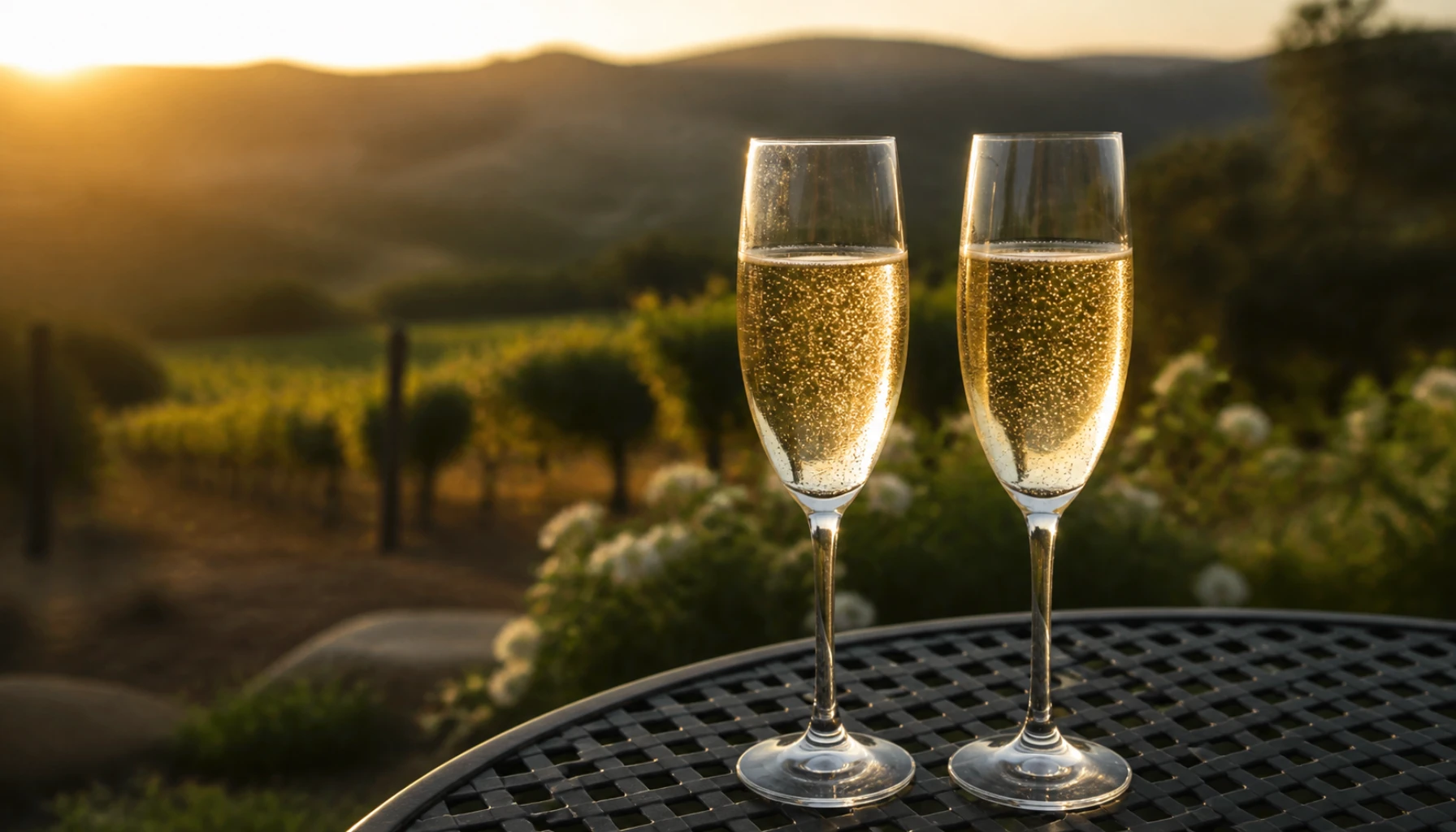
Starting the day with bubbles is a legitimate Temecula tradition — and three houses here make the real thing, the slow way, on site.
There is a logic to the tradition beyond festivity. At eleven in the morning your palate is the freshest it will be all day, and sparkling wine is built for a fresh palate: high acid, fine bubbles, nothing heavy to recover from. Nothing needs to prepare you for bubbles, and bubbles prepare you for everything else — which is why they pour first, in the flight and in the day.
The surprise is that a warm inland valley bothers to make them properly. Temecula has three houses doing the full French method under their own roofs — and one bottle, flavored with almond, that is more famous than all of that put together. Both facts belong in your day.
Méthode champenoise
The expensive way to make a wine sparkle happens inside the very bottle you are holding. Here is the whole trick, in five moves.
Cheap bubbles are injected, the way soda is. Mid-tier bubbles are raised in big pressurized tanks — Prosecco’s method — and bottled fizzy. The traditional method does something slower and stranger: it takes a finished still wine and ferments it a second time, sealed inside its own bottle, so the bubbles are born exactly where you drink them.
-
A still wine first
Grapes for sparkling get picked early, while acid is high and sugar is modest. The result is a lean, tart base wine — unimpressive on its own, which is the point.
-
The second ferment
The base wine goes into heavy glass with a small dose of yeast and sugar, capped tight. The yeast eats, the carbon dioxide has nowhere to go, and the gas dissolves into the wine as pressure builds — several times what a car tire holds.
-
The long sleep
The spent yeast stays in the bottle for months or years and the wine rests on it. The bakery notes — bread, brioche, toast — come from this long sleep, and they separate real sparkling from merely fizzy white wine.
-
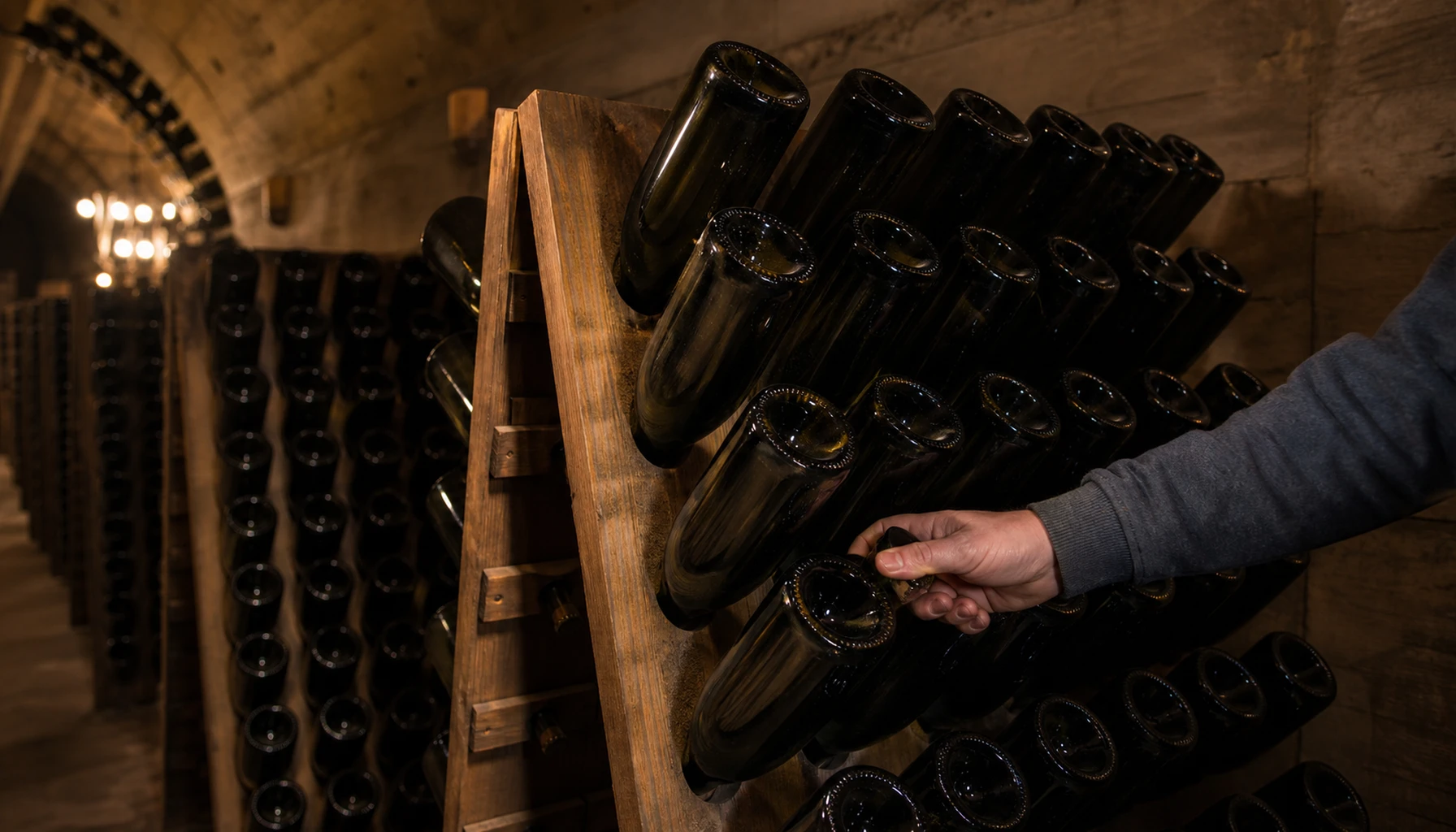
Riddling
The sediment has to come out. Bottles go neck-down into A-frame racks and get a small turn every day, walking the yeast down into the neck — a job done by patient hands or, these days, patient machines.
-
Disgorging & dosage
The neck is frozen, the cap comes off, and pressure fires out the plug of sediment. The tiny space left behind is topped with the dosage — wine plus a measure of sugar that sets the final sweetness — then cork, cage, done.
One thing it cannot be called is Champagne. Champagne is a place — a chalky region east of Paris — and the name legally belongs to it, no matter how faithfully the method is followed elsewhere. So American labels say méthode champenoise or traditional method instead. Same technique, different address.
Three Temecula houses do all of the above on site. Thornton built an evening around it: bubbles in a château courtyard, golden hour on the terrace, and the long-running summer jazz series that fills the place at sunset. South Coast makes its sparkling inside one of the region’s most decorated cellars, wrapped in a resort — you can taste where it was made and sleep where you tasted. And Carter Estate, South Coast’s quieter sister property, kept the bubbles and left the bustle behind — the place for a sparkling flight without a crowd.
The almond sparkling
The valley’s best-known wine is not its most serious one. These two facts are unrelated.
Wilson Creek’s almond sparkling is exactly what it sounds like: sparkling wine finished with a kiss of almond — marzipan riding the bubbles — sweet, unserious, and completely sure of itself. It is the valley’s most famous single bottle by a distance — the one half of Southern California knows by name.
Serious tasters roll their eyes at it, then a striking percentage of them drive home with a bottle. That is the trick: it asks nothing of you. It is the pour for the mixed group, the toast, the friend who swears they don’t like wine — the easiest yes in the valley, poured on its busiest lawns.
The sweetness scale
Sweetness in sparkling wine is decided at the last minute, printed in French, and labeled almost backwards. Decode it once, own it for life.
Remember the dosage — that final spoonful of sugar at disgorging? The words on a sparkling label simply report how heavy the spoon was, from nothing at all to full dessert. The scale runs like this:
| Brut Nature | Bone dry — no dosage at all, under 3 grams of sugar per liter. Austere, electric, for acid lovers |
|---|---|
| Brut | Dry — under 12 grams. The default setting for serious sparkling and the safest word on any list |
| Extra Dry | The trap — 12–17 grams, noticeably sweeter than Brut despite the name. Soft, round, off-dry |
| Sec | French for “dry,” honest about nothing — 17–32 grams and lightly sweet in the glass |
| Demi-Sec | Half-dry in name, frankly sweet in fact — 32–50 grams; happiest sitting next to dessert |
| Doux | Fully sweet — over 50 grams, and rare; less a wine with dessert than a dessert with bubbles |
In a flight, bubbles follow the same law as everything else in a Temecula tasting: dry before sweet. If a list carries more than one, start with the driest — Brut before Extra Dry, anything almond-flavored last, where its sweetness closes the show instead of stealing it. Or skip the strategy: a quiet sparkling flight at Carter Estate to open the day, golden hour on Thornton’s terrace to close it, and the valley’s case for bubbles made in two stops.
Featured videos
Bubbles from a warm valley — traditional-method patience and the crowd-pleasers, both explained.