Sweet & dessert wines
Sweet and fortified wines close most flights in this valley. That is not a nightcap tacked on out of habit — it is the encore.
Sweet wine has a reputation problem, and it earned it secondhand: most people’s first sweet wine was a cheap one, and the verdict fossilized on the spot. Real dessert wine is a different animal. It is not wine with sugar stirred in — it is wine with the water taken out or the fermentation stopped short, which means more of everything: more fruit, more perfume, more weight, in a pour the size of an espresso.
Temecula’s flights run dry toward sweet, five or six wines deep, and the last glass is where a lot of rooms quietly show off. This page covers the three things that glass usually is — late-harvest, port-style, or sweet Muscat — and how to meet it with some enthusiasm instead of a polite wince.
Late harvest: the long hang
The recipe is mostly nerve: leave the fruit on the vine weeks past picking time and let the sun do the concentrating.
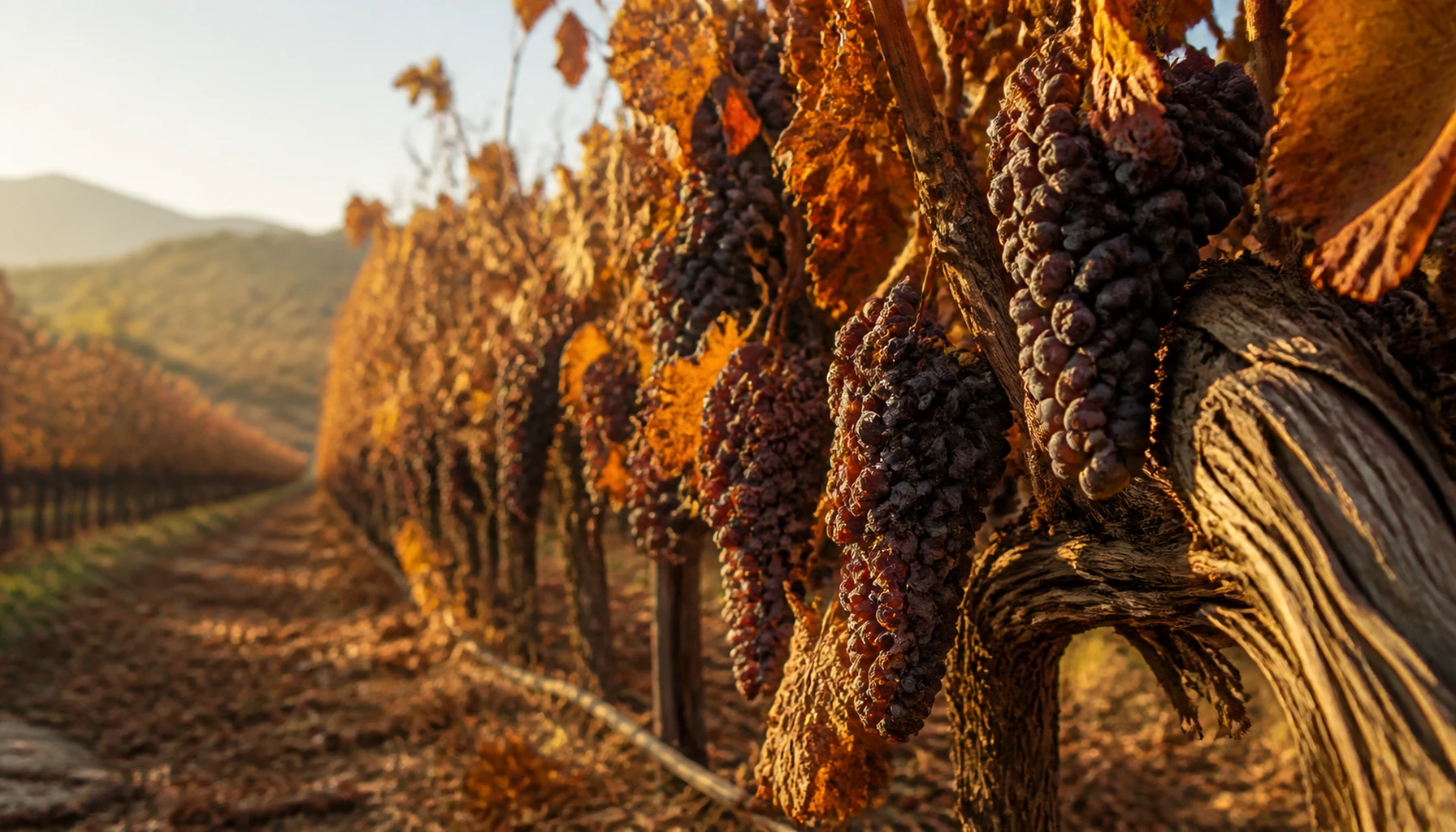
Every grape in the valley gets picked when its sugar and acid strike the balance the winemaker wants — except these. A late-harvest lot stays out well past that point, hanging into the autumn while water slowly leaves the berries and the skins pucker toward raisin. Nothing is added; something is subtracted. What remains is sugar, acid, and flavor at double intensity, and every extra week on the vine is a small bet against weather that the winemaker has decided to make on your behalf.
Ferment that concentrated juice and the yeast gives out — or is stopped — before it can finish the sugar, so the sweetness in the glass is the vineyard’s own, held over. Whites go to honey, apricot, and marmalade; reds go to fig and dried cherry. The style runs to half bottles and small pours for an honest reason — you are drinking what evaporation spared — but nothing about it is stingy in the glass.
Port-style: wine, interrupted
Fortified wine is fermentation stopped mid-sentence — and the sweetness is what the yeast never got to finish.
Here is the whole trick. Midway through fermentation, while the yeast is still eating sugar, the winemaker adds a dose of neutral grape spirit. The jump in alcohol stops the yeast cold, the sugar it never finished stays in the wine, and the result is dark, sweet, and somewhere near twenty percent — a wine with its ending written in from the middle. That strength is also a preservative: this is the one open bottle on your counter that forgives being forgotten for a month.
As for the name: Port is an address before it is a recipe. The real thing comes from Portugal’s Douro Valley, and the word stays home — which is why honest labels here say “port-style,” the same reason the valley’s serious sparkling houses say méthode champenoise rather than Champagne. The technique travels; the name does not.
Muscat, Moscato & the sweet whites
Not every sweet wine waits for dessert. Some of them just want a hot afternoon and a cold glass.
Muscat Canelli — Moscato, on the labels that prefer Italian — is the one grape that actually tastes like the fruit it came from: orange blossom, honeysuckle, ripe table grapes, poured hard-chilled. Sweet Muscat shows up on lists all over the valley, usually as the lightest and least solemn thing on the page. Since the grape is Italian at heart, the valley’s Italian-minded cellars — Cougar, Mount Palomar, Robert Renzoni — are a reasonable place to start asking. The local sweet tooth is no secret anyway: the same crowd-pleasing instinct made Wilson Creek’s almond sparkling the most famous bottle in the valley.
One distinction will save you from ordering the wrong glass all weekend: fruity is a smell; sweet is a taste. A bone-dry Viognier can smell like an entire orchard and still finish stone dry, because “sweet” means one thing only — sugar left in the wine. If you want to sound technical, ask whether a wine is dry or off-dry. If you want a straight answer, ask “will this taste sweet?” Pourers love that question; it means they can pour you the right thing.
How flights end
One rule governs the pairing, and the flight itself obeys it too: the wine must be sweeter than whatever sits beside it.
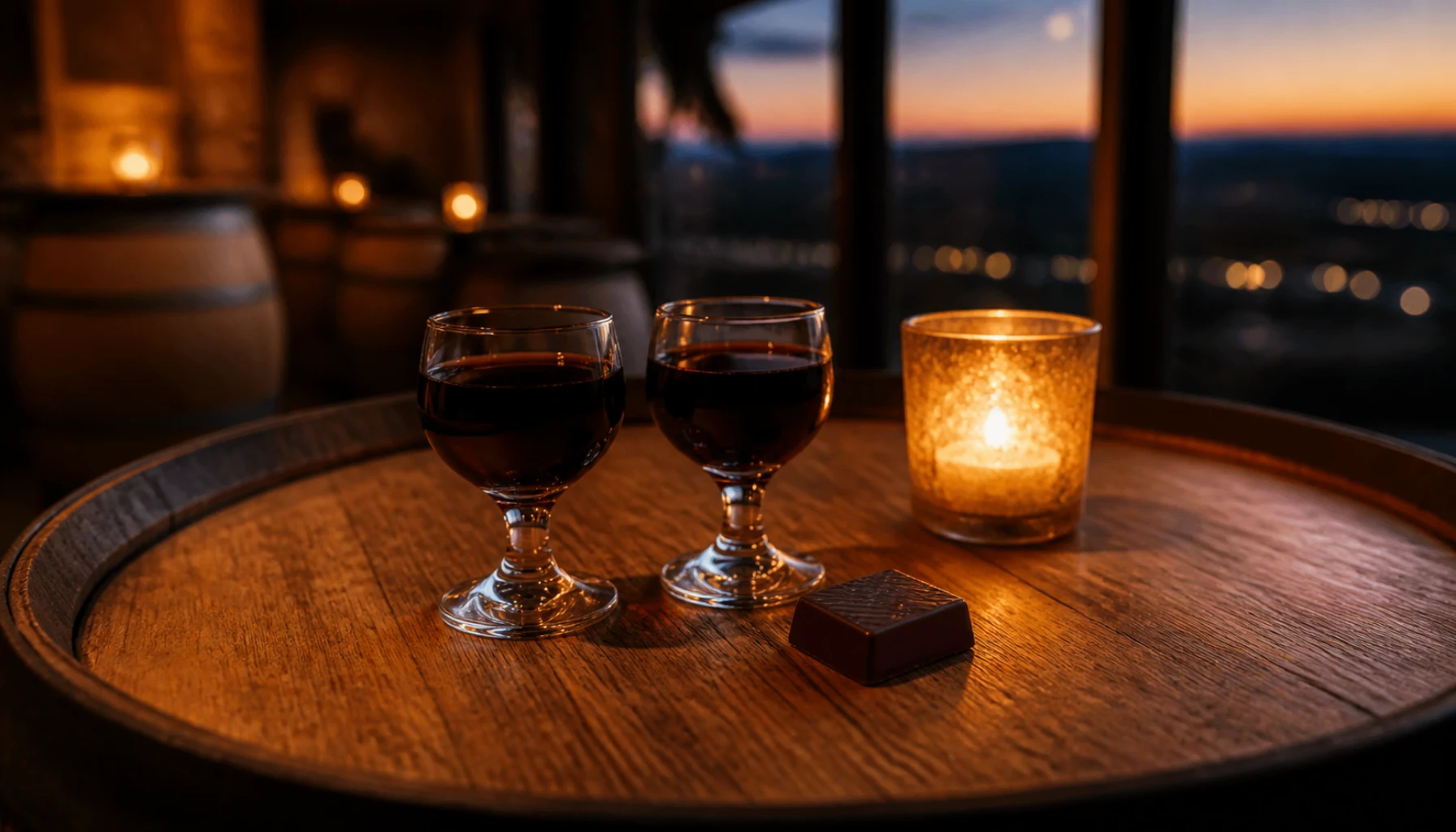
Put a merely off-dry wine next to a rich dessert and the dessert wins — the wine turns thin and sour by comparison, through no fault of its own. Keep the wine sweeter than the plate and both get better. That is why port-style and dark chocolate is the classic it is, why late-harvest whites flatter a fruit tart, and why the old sweet-wine-and-blue-cheese trick — salt against honey — still converts skeptics at tasting bars every weekend. It is also why sugar goes last in the flight itself: after the sweet pour, anything dry would taste like a lemon with a grievance.
So here is the honest case, if you have already decided you do not like sweet wine: taste the last pour anyway. It is two ounces, your palate has just done five dry wines’ worth of work and earned dessert, and this is the corner of the list where the valley’s winemakers are visibly having fun. The bottle you take home is the most practical souvenir on the shelf — dessert already made, serving eight, and if it is fortified, patient enough to wait for the occasion.
Featured videos
The last glass of the day — ports, late-harvest bottlings and the almond sparkler the valley is quietly famous for.