The history of sweet & dessert wine
The last pour on a Temecula flight is the oldest idea on the list. For most of wine’s history, sweet was not dessert — it was the throne.
Every flight in this valley runs dry toward sweet, and it is easy to read that order as a demotion — serious wines first, candy last. History read the list the other way: for most of wine’s recorded run, the bottles that kings taxed and merchants crossed oceans for were the sweet ones, because sugar was scarce and sweetness kept wine alive long before anyone understood why. Dry table wine is the historical upstart; the last pour is the old nobility.
The arc runs from straw mats in the ancient Mediterranean to the “wine of kings,” through the sea voyages that invented Port and perfected Madeira and the dry century that nearly forgot it all, down to the small, serious glass that closes a Temecula flight today — the whole story in two ounces.
When sweet wore the crown
Straw mats, noble rot, and royal bidding wars — for centuries the most coveted wines in the world were the sweetest ones.
The oldest trick in winemaking is subtraction. The Greeks and Romans laid ripe clusters on straw mats and let the sun take the water out first — straw wine, the ancestor of every raisined dessert bottle since. Rome’s most celebrated wine, Falernian, was amber, sweet, and strong enough that Pliny claimed it would hold a flame. It is the same bet Temecula’s late-harvest lots make every autumn, the vine standing in for the mat.
When Europe’s courts wanted a wine worth a treaty, they reached for sugar. Tokaji aszú, born on Hungary’s hills in the 1600s from grapes shriveled berry by berry under noble rot, took the title credited to Louis XIV: “wine of kings, king of wines.” Constantia, from the Cape of Good Hope, was the bottle Napoleon asked for in exile on Saint Helena. Sauternes turned a river fog and a fungus into liquid apricot and made it aristocracy. Sweetness was scarcity, and scarcity was status.
Fortification: born of the sea
Add spirit, stop the ferment, survive the ocean — the fortified wing of the wine list was drawn by ships.
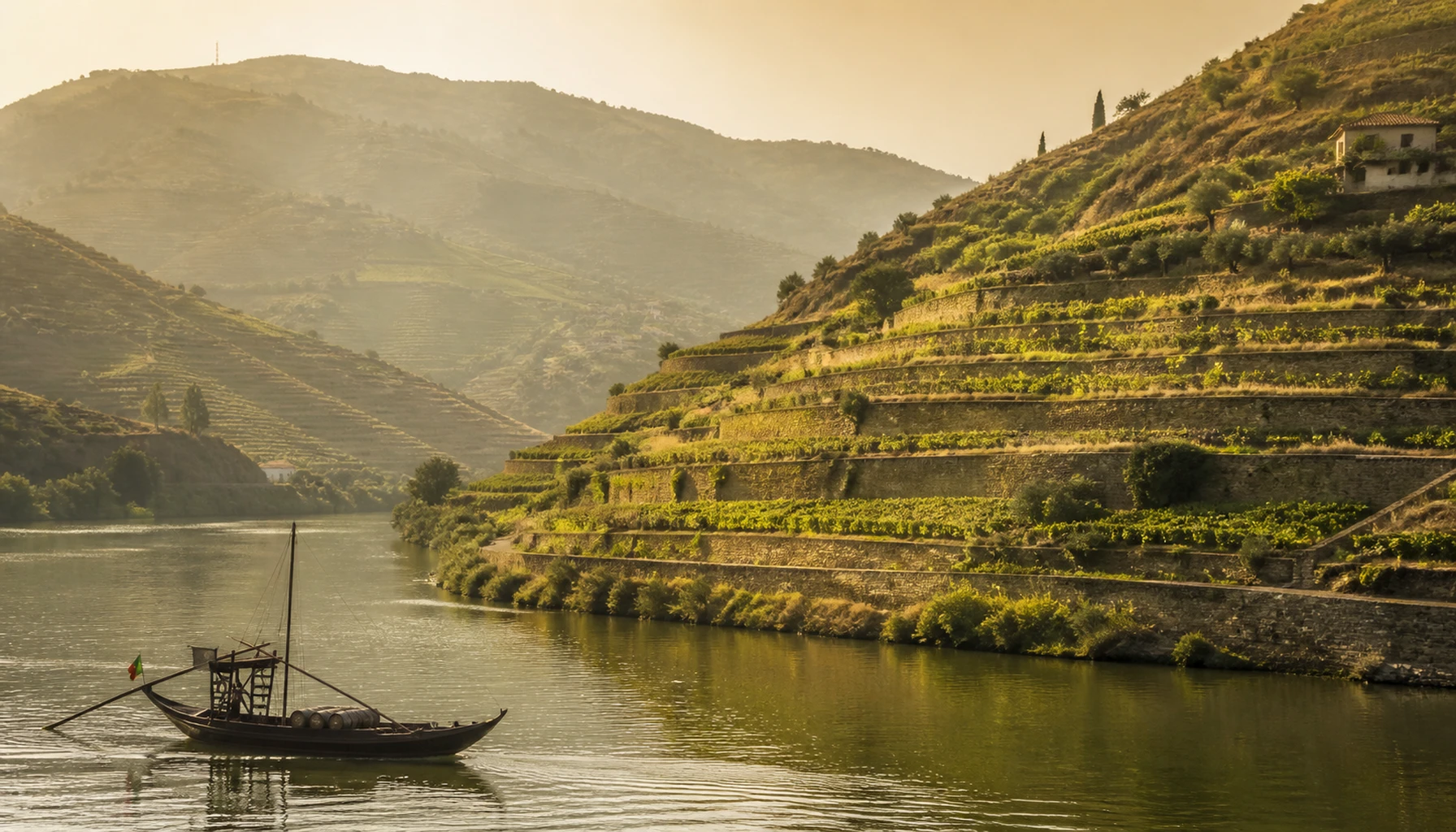
Months at sea turned most wine to vinegar; the fix was a dose of grape spirit, added mid-ferment so the yeast stops cold and the grape’s own sugar stays. Port is the style the sea built most famously: English merchants, cut off from French wine by war and politics in the seventeenth and eighteenth centuries, shipped the Douro’s black mountain reds home fortified for the voyage — and liked them better that way. By 1756 the Douro had been demarcated, among the world’s first protected wine regions.
The sea improved as well as preserved. Madeira, casked as ballast, crossed the tropics and came home cooked, caramelized, and practically immortal — islanders learned to send their wine on round trips on purpose, then to fake the voyage with warm cellars. Sherry rode out of Jerez through the solera, a cascade of casks in which young wine endlessly refreshes old, its darkest, sweetest styles built on sun-dried grapes — the ancients’ mat trick, still working.
The dry century, and the last pour
Phylloxera took the vines, fashion took the rest — and the comeback turned out to be small, serious, and poured last.
In the late nineteenth century phylloxera, a sap-sucking American root louse, hollowed out Europe’s vineyards; the replanted twentieth century chased volume, then sophistication, and sophistication had decided to be dry. The great sweet names slid to the margins, and a flood of cheap imitations finished the job — teaching a few generations to flinch at the word “sweet” over bottles the old kings would not have recognized.
The style never died; what survived is the serious end — small lots, half bottles, patience — and that is the form it takes in this valley, where sweet and fortified wines close most flights. The last glass on a Temecula list is usually one of three old arguments: a late-harvest pour running the ancients’ arithmetic, a port-style red carrying the Douro’s recipe, or a sweet Muscat, which shows up on lists all over the valley — the Italian-minded cellars of Cougar, Mount Palomar, and Robert Renzoni are a reasonable place to start asking. It lands last for a reason: sugar ends the flight; nothing dry survives it.
Featured videos
The Douro’s terraces, tawny against ruby, and how Port earned its keep at sea — press play, pour something small, settle in.
The short version
Sun on straw mats made the first great sweet wines; noble rot crowned them at Versailles; brandy and the Atlantic built Port, Madeira, and Sherry; a dry century pushed the whole family to the margins — and a warm valley twenty-two miles from the Pacific now pours the survivor last on most flights. Meet it with some ceremony.