The history of rosé
Wine’s newest fashion is also its oldest color. The pale glass came first — twenty-six centuries before anyone called it a trend.
Rosé arrives dressed as a lifestyle purchase — summer, boats, a certain slant of light — and it is easy to assume the wine is as young as its marketing. It is the opposite: for most of wine’s recorded history, nearly everything anyone drank poured closer to pink than to the reds we call serious. The dark glass is the late arrival.
The story runs from Greek sailors nosing into a Provençal harbor to the pale claret England drank by the fleet-load, from a California accident that made pink sweet and famous to the bone-dry revival that put a coral glass on every list — this valley’s included.
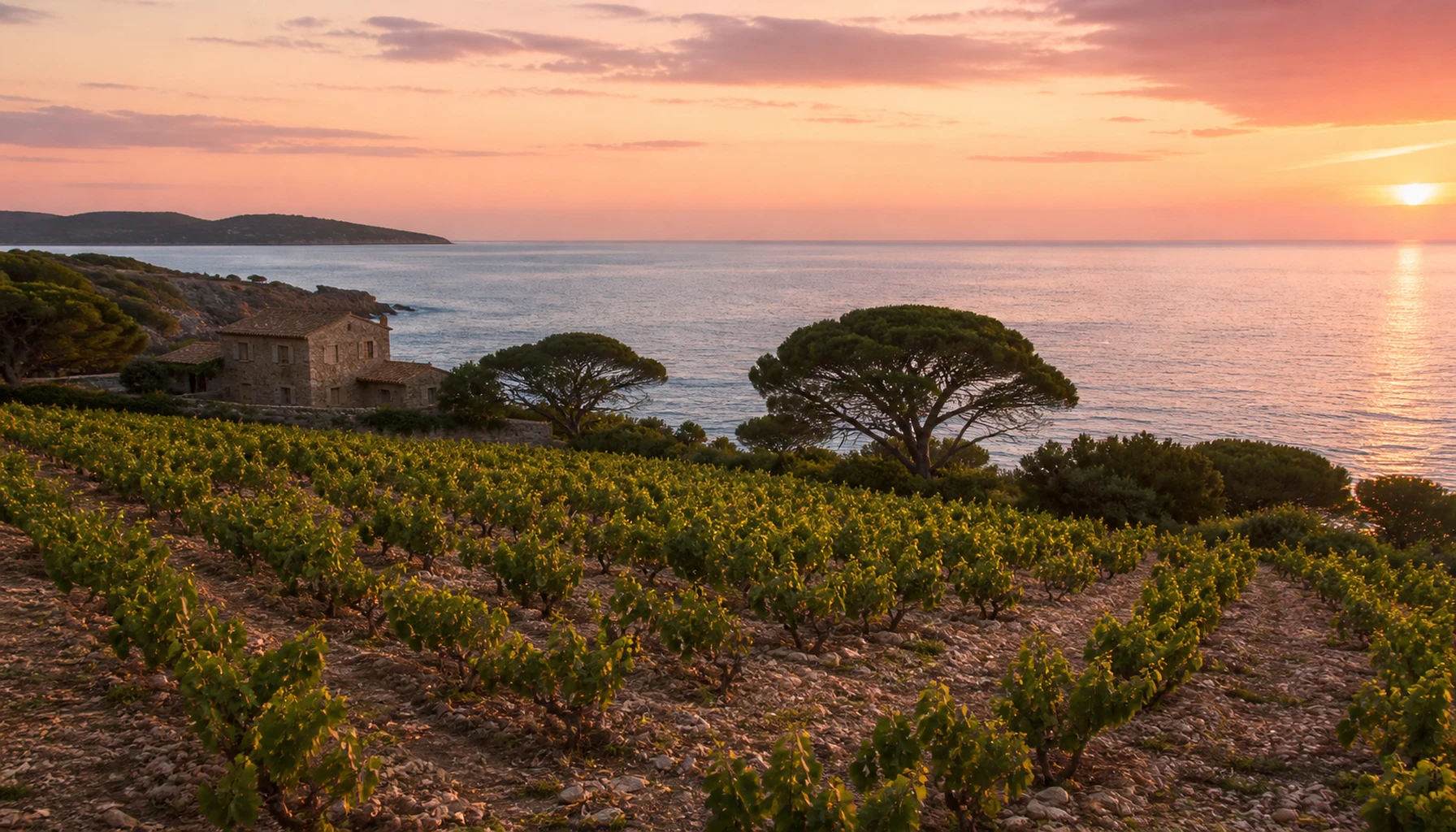
Wine was born blushing
The ancients pressed fast and poured pale — and the Greeks carried the habit to Provence.
Ancient winemaking did not linger: grapes were trodden or pressed quickly, the juice ran off its skins in hours, and fermentation carried on without them — which is, near enough, how rosé is made today. The weeks-long soak behind a modern red’s color and grip came later; most of what Greece and Rome drank sat far nearer to pink.
Around 600 BC, Greek settlers from Phocaea sailed west, founded Massalia — today’s Marseille — and planted vines above the harbor. That makes Provence France’s oldest wine region, and its wines were pale from the very first vintage. When a Provençal estate pours a bone-dry pink today, it is not chasing a fashion. It is continuing the original house style, twenty-six centuries in and counting.
Claret, by the fleet-load
England’s medieval house wine was Bordeaux — and for centuries it poured pink.
When Eleanor of Aquitaine’s wedding put Bordeaux under the English crown in 1152, it opened the medieval world’s busiest wine trade — fleets sailing north each autumn with the new vintage. What filled the barrels was clairet: a pale, bright, briefly macerated wine far closer to a dark rosé than to the black-purple Bordeaux of today. The English wore the word down to “claret” and kept it for red Bordeaux long after the wine turned dark. The wine changed; the word remembers when it didn’t.
Because darken it did. As longer maceration, barrel aging, and shifting fashion pushed Europe’s benchmark wines toward depth and grip, pink slid from the continent’s default pour to a seaside afterthought. It would take two rescues to put it back: one accidental, Californian, and sweet; the other deliberate, Provençal, and dry as a stone.
1975: the accident that sold
A stuck tank at Sutter Home turned pale Zinfandel sweet — and bankrolled a heritage.
In 1975, a tank of pale Zinfandel juice at Sutter Home stalled out mid-ferment, leaving natural sugar behind. The cellar bottled the accident anyway, and White Zinfandel went on to outsell everything — for years the best-selling premium wine in America, and the glass that introduced an entire generation to wine. Sommeliers winced; accountants did not.
The accident had one deeply serious consequence: demand kept California’s old Zinfandel vineyards in the ground just when they might have been torn out, financing the survival of the old vines behind today’s serious reds — including a grape that never left this valley. It also taught a generation that pink means sweet — a reflex the dry revival has been politely un-teaching ever since. The rosé page shows how to tell the two pinks apart from the bar stool.
Provence goes dry, the world follows
The oldest region went all-in on pale, dry pink — and soon no list on earth could skip it.
Provence spent the twentieth century turning its ancient habit into an identity: pale, bone-dry pink as the house wine of the Riviera, the glass that stood for a whole idea of summer. Then the 2000s and 2010s brought the global rosé boom, and dry pink went from afterthought to a category no list can skip — the old original suddenly the new benchmark.
Temecula pours the modern chapter. The dry pinks on lists around the valley are made mostly from Grenache, Sangiovese, or Syrah — grapes this warm granite valley already grows well — and they meet their moment on every ninety-degree afternoon, poured cold while the Rainbow Gap’s marine air is still on its way. Miramonte pours Rhône varieties on a hillside terrace, Bottaia’s summer pool club may be the most rosé-shaped setting in the valley, and the local case in full — the method, the two pinks, the patios — lives on the rosé page.
Featured videos
Provence from the vineyard rows, a Master of Wine on the pale style, and the pink method explained — press play, pour something cold, settle in.
Twenty-six centuries of pink
Greek sailors poured it pale into Provence; medieval England drank it pink and called it claret; a stuck tank in 1975 made it sweet, famous, and briefly unserious; Provence answered bone dry, and the world followed. The cold coral glass on a Temecula patio — Grenache, Sangiovese, or Syrah — is the oldest style on the list, wearing its newest clothes.