Chardonnay
The world’s most traveled white keeps a sunny corner in this valley — generous, round, and poured without apology.
Chardonnay is the most famous white grape on earth and the most argued about, and both facts trace to the same secret: the grape itself is nearly neutral. More than any other variety on a Temecula list, Chardonnay is a canvas — it reports the climate it grew in and the choices made in the cellar with almost journalistic fidelity. Grown on cold limestone it comes back lean and flinty; grown in sunshine it comes back golden and generous. Same grape, opposite postcards.
Temecula’s postcard is the sunny one. Warm vintages here treat the grape kindly, and the house result is ripe stone fruit and melon, a round build, and a wine that is ready the day it is poured — the same early-drinking generosity that marks the valley’s reds. Expect comfort rather than austerity: this is Chardonnay with its collar unbuttoned.
And it has seniority. Fashions have swept the valley since the first vines went into the granite in the late 1960s — the Rhône wave, the Italian and Spanish benches — and through all of it Chardonnay never left. It holds its corner on lists around the valley the way a founding member holds a chair: quietly, and by right.
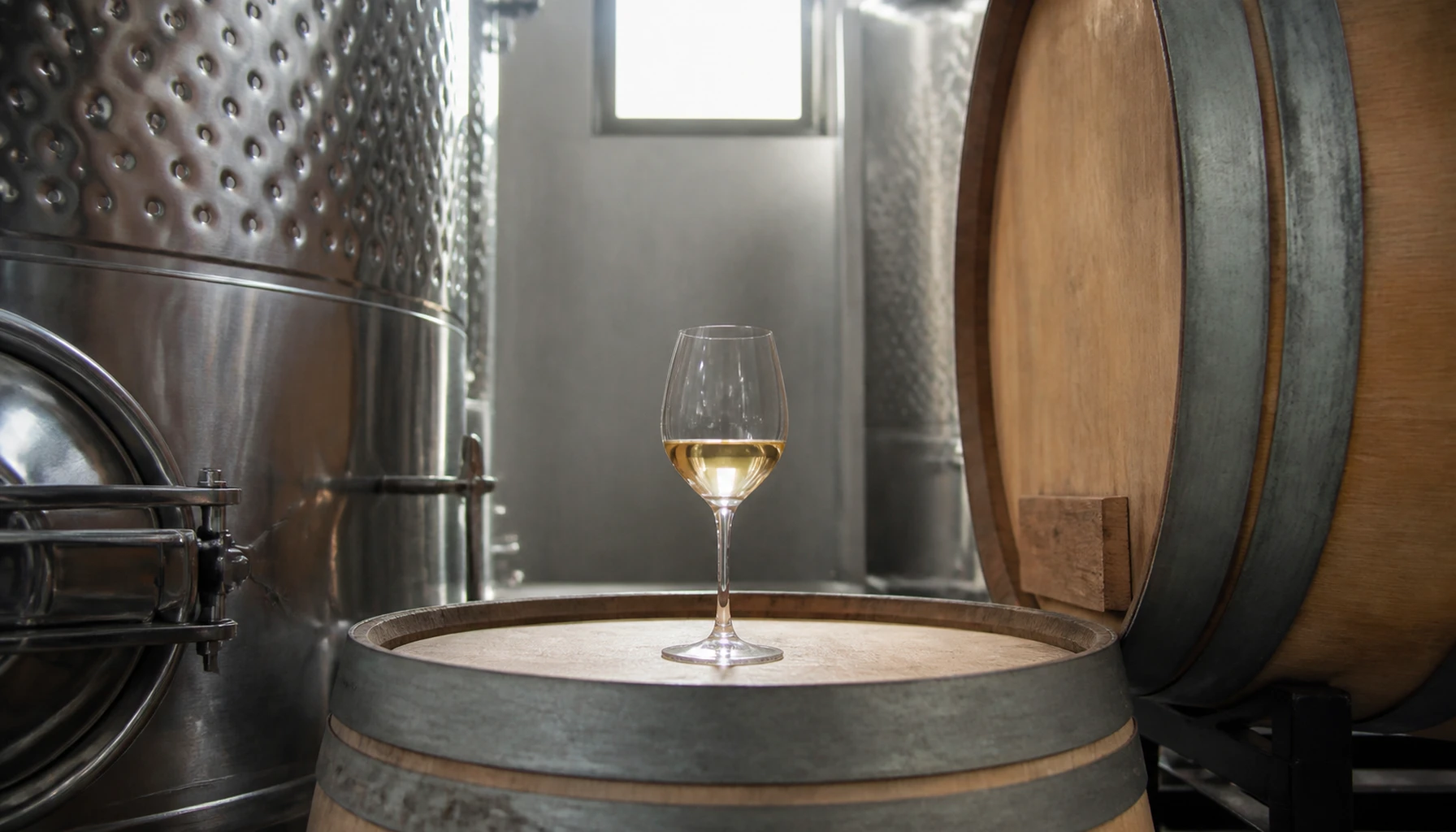
Steel, barrel, and butter
Most strong opinions about Chardonnay are really opinions about oak — here is how to tell which glass you are holding.
Because the grape is a canvas, the cellar holds the brushes, and two decisions paint most of the picture. The first is the vessel: raised in steel, Chardonnay stays brisk and orchard-crisp, all green apple and pear; raised in barrel, it picks up vanilla, toast and baking spice, and trades some snap for breadth. The second is a quiet piece of chemistry called the malolactic conversion, in which the wine’s sharp, green-apple acid is converted into the soft, creamy kind found in milk — the source of the famous “buttery” register. It is a softening, not a flavoring; some houses embrace it, some skip it, and the difference in the glass is night and morning.
Neither school is the correct one. But knowing the levers turns “I don’t like Chardonnay” into a more useful sentence — because nine times out of ten what the speaker dislikes is one style of one grape, usually the toastiest one.
| Steel-raised | Bright orchard fruit — green apple, pear, citrus pith; brisk, cool and unadorned |
|---|---|
| Barrel-raised | Vanilla, toast and baking spice over riper fruit — more weight, longer finish |
| Malolactic | The cream-and-butter register — a softening conversion of the wine’s acid, not an added flavor |
| Serve it | Cellar-cool, 45–50°F — the richer the style, the more a few degrees of warmth flatter it |
| The fair test | Ask how the house raised it before you judge the grape — you may only dislike one of its outfits |
Where to taste it
Start where the valley itself started, then follow the bubbles.
The natural first door is Callaway — the valley’s first commercial winery, pouring since 1974. Ely Callaway planted here when Temecula was still cattle country and almost nobody believed granite hills an hour from the coast could ripen wine grapes properly; drinking the classic grape at the house that went first puts the whole story in one glass, and the Meritage restaurant upstairs makes it an easy lunch stop besides. Beyond that origin point, Chardonnay holds its corner on lists around the valley — ask each house for its style, and you can run your own steel-versus-barrel seminar across an afternoon.
The grape also moonlights in the valley’s most festive corner. Worldwide, Chardonnay is the backbone of blanc-de-blancs sparkling wine, and three houses here — Thornton, South Coast, and Carter Estate — make méthode-champenoise sparkling on site. Ask what is in the cuvée, and see the sparkling page for how the magic trick works.
Featured videos
Winemakers and tasters on the world’s favorite white — the oak, the butter, and the grape underneath.
From a village you could walk through
The world’s favorite white is named for a small Burgundian village, carries a peasant grape in its parentage, and owes its California empire to one blind tasting in Paris in 1976 — an afternoon that ended with French judges handing the white flight to California. The full story is a good one.