Viognier
Apricot and honeysuckle on the nose, silk across the tongue — the Rhône’s great perfumed grape, doing its best work in Temecula heat.
Every wine region eventually answers for a white. Napa answers Chardonnay, the Loire answers Sauvignon Blanc, and Temecula’s honest answer is Viognier — say it vee-oh-NYAY — the most perfumed grape of the northern Rhône, and the rare white that treats a hot granite valley as a promotion rather than a hardship. The nose is the announcement: apricot and white peach, honeysuckle, orange blossom, sometimes a flicker of candied ginger at the edges. The palate is the surprise: full, round, and moving across the tongue more like silk than like lemonade.
The grape’s bargain is simple and a little ruthless. Viognier trades acidity for perfume, and it pays out only at full ripeness — harvested cautious it tastes of very little, and the aromatics arrive precisely as the sharpness departs. That makes it a nerve-racking timing problem in cool country and a natural here: long warm days walk the fruit all the way to ripe, while the marine air sliding through the Rainbow Gap each evening holds the last necessary thread of freshness in the berries.
The valley has voted with its lists. Viognier shows up on nearly every one, usually among the opening pours of a flight, and it wears the informal title of flagship without much argument from anybody. If the whole appellation had to be summarized in a single white glass, this is the glass.
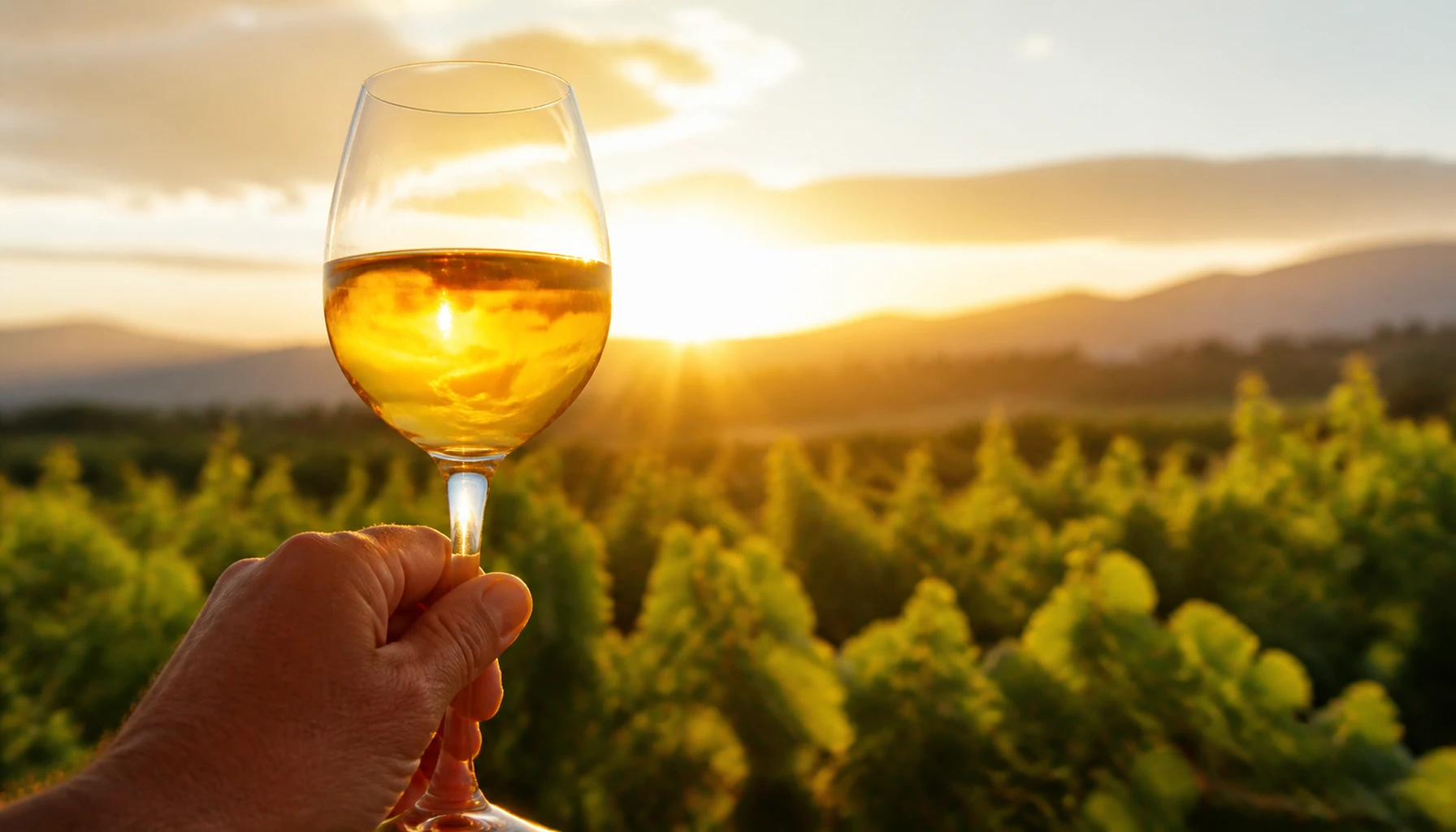
How to drink it
Give your nose the first two sips — with this grape, smelling is most of the point.
Viognier is the easiest wine in the valley to enjoy and one of the easiest to misread. Because it smells of orchard fruit and flowers, first-timers brace for something sweet — then the sip lands dry, and the double-take is half the fun. Perfume is not sugar. A well-made Viognier carries all that apricot on a dry frame, and pulling off that trick is precisely what made the grape famous.
Styles here run a short spectrum. Most houses raise it in steel and pour it young, all blossom and freshness; some ferment or rest it in barrel for a rounder, creamier build. Either way it is a wine of texture as much as flavor — hold a sip a moment and notice the weight of it before you go hunting adjectives.
| The nose | Apricot, white peach, honeysuckle, orange blossom — get into the bowl and stay a moment; the aroma is the headline act |
|---|---|
| The palate | Dry, full-bodied, soft-acid — it smells sweet and finishes dry, the classic Viognier double-take |
| Serve it | Cellar-cool, 45–50°F — straight-from-the-fridge mutes precisely the perfume you came for |
| At the table | Whatever apricots would flatter: roast chicken, scallops, cream sauces, a gentle curry — low bitterness and high aroma make it braver with spice than most whites |
| If you love | Rich Chardonnay, this is your gateway to the Rhône; if you love dry Riesling, come for the perfume and forgive the softer spine |
Where to taste it
The short answer is nearly everywhere — which is what being the flagship means.
You will not have to hunt. Viognier appears on nearly every tasting list in the valley, so the better question is whose version to take seriously — and the Rhône-leaning houses are the natural place to start. Miramonte has made Rhône varieties the house cause, pours them on a hillside terrace, and usefully keeps pouring after most rooms wind down. Wherever you land, ask whether the Viognier saw steel or barrel; the answer tells you which of the grape’s two outfits you are about to meet.
It is also the valley’s great lunch white. An hour up the hill at Falkner, a window table and something pale, has rescued more than one over-ambitious itinerary — and if the something pale is Viognier, so much the better. One exception to plan around: Wiens famously skips the white-wine hedge altogether, so do not walk in expecting the flagship there.
One last place Viognier hides: inside red wine. The old Côte-Rôtie trick of co-fermenting a splash of it with Syrah deepens the red’s color and lifts its perfume — so if a pourer mentions Viognier in a Syrah, nothing has gone wrong. That is the oldest kind of teamwork in the Rhône playbook.
Featured videos
Sommeliers, growers and tasters on Viognier — press play, pour something apricot-scented, settle in.
The grape that nearly vanished
Here is the astonishing part: within living memory, this grape was nearly extinct. By the 1960s its home appellation of Condrieu was down to roughly a dozen planted hectares — you could have strolled the world’s entire supply in an afternoon — before a late-century rescue and a band of besotted Californians carried it back from the edge and across an ocean to valleys like this one. The whole story is worth five minutes.