Sauvignon Blanc
Cut grass, grapefruit, and a line of acid you could shave with — the white that resets a palate and never once apologizes for it.
Every wine list carries a few grapes that need introducing. Sauvignon Blanc is not one of them. It is the most recognizable white in the world — cut grass, gooseberry, grapefruit pith, a green flash of just-snapped pea shoot — and it announces itself from a foot away, before the glass ever reaches your nose. Professionals miss famous reds in blind tastings all the time. Nobody misses Sauvignon Blanc.
The signature is chemistry, not romance. The grassy side comes from the same family of compounds that makes a bell pepper smell like a bell pepper; the sunnier side — grapefruit, passionfruit — from aromatics that bloom as the fruit ripens. Grow the grape cool and the green notes lead; grow it warm and the citrus takes over. What never changes is the acid: a straight, mouth-watering line that keeps the wine awake in any climate, and keeps you awake with it.
In Temecula the dial sits sunny side up. Long warm days push the pith and citrus forward and turn the lawn-clipping shout down to a murmur, while the evening ocean air through the Rainbow Gap holds the acid line the grape lives on. It plays the supporting cast here by design — Viognier holds the flagship job — but no white in the valley is better at the work of a hot afternoon: it resets, it refreshes, and it sharpens whatever you taste next.
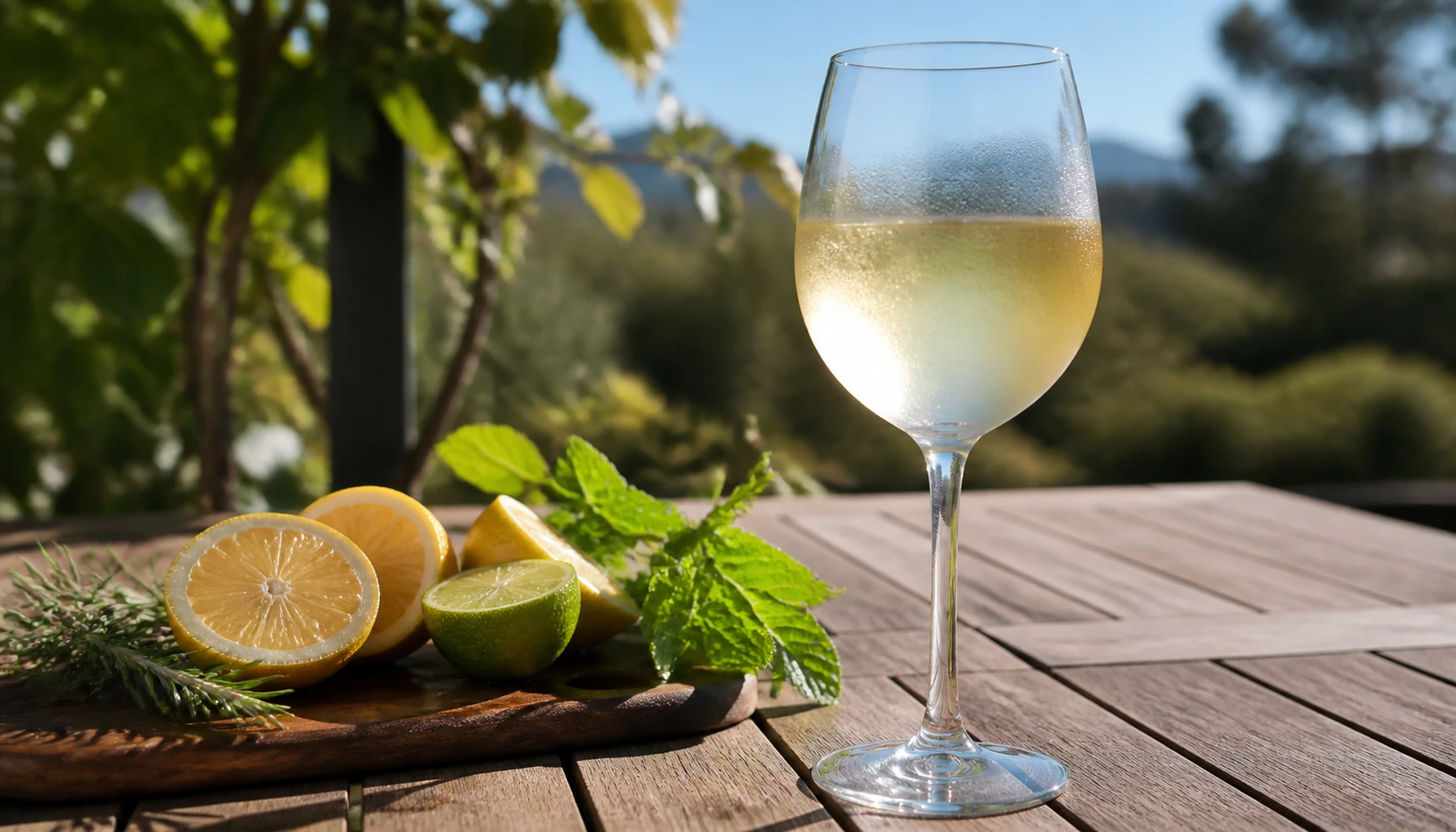
How to drink it
One grape, three accents — and the rare aromatic white that forgives an ice bucket.
Sauvignon Blanc speaks with an accent, and learning the three main ones tells you more than any tasting note. The Loire school — Sancerre, Pouilly-Fumé — is the quiet one: citrus, flint, restraint, no oak anywhere. The New Zealand school is the loud one: passionfruit and gooseberry at broadcast strength, the style that conquered the world’s shelves in a single generation. Warm California — Temecula included — sits between them: riper citrus, a rounder middle, the volume at conversation level. Expect the sunnier school here, with the acid intact.
| Serve | Properly cold — this is the one aromatic white that shrugs off an ice bucket. Start near fridge-cold on a hot patio; the aromatics arrive as the frost fades from the glass |
|---|---|
| In the flight | Early, while your palate is sharpest — its acid does the same wake-up work as a sparkling pour, and it makes every richer white after it taste rounder still |
| At the table | Anything from the sea, anything green, and goat cheese above all — a pairing the Loire settled centuries ago |
| If you love it | Hunt its Mediterranean cousin: Vermentino answers the same craving with dried herbs and sea salt instead of cut grass |
Finding it in the valley
Not on every list — which is exactly what makes spotting one satisfying.
Honesty first: Temecula is Viognier country, and Sauvignon Blanc is a minority holding — a handful of houses keep one, and plenty of good rooms do not. Treat that as sport. Scan the white side of any list for the name — and for “Fumé Blanc,” its California alias — and when one surfaces, order that flight; a room that bothers with the sharpest white on the shelf is telling you something about how it thinks.
Thinking in occasions improves the odds. A sharp white is a lunch wine before it is anything else, and the valley’s best lunch setting was built for something pale and cold: the window tables up the hill at Falkner, where the view handles half the pairing. And if the day turns up no Sauvignon Blanc at all, two neighbors scratch the same itch — the Albariño at Masia de la Vinya, a deliberate turn off the quiet southern road that earns the detour, and the Vermentino poured at the valley’s Italian houses, Cougar first among them.
One route to skip on this particular errand: Wiens, which famously pours big dark blends without a white-wine hedge in sight. Respect the commitment; hunt elsewhere.
Featured videos
Sommeliers and growers on the world’s sharpest white — press play, pour something cold, settle in.
Two homelands and a scandal
Sauvignon Blanc kept two famous addresses — the flint hills of the upper Loire and the blending cellars of Bordeaux — for as long as anyone kept records, then let a valley at the bottom of New Zealand reinvent it inside a single generation. Along the way it quietly fathered Cabernet Sauvignon in a seventeenth-century accident that DNA testing only uncovered in the 1990s. The full story, scandal included, has a page of its own.