Vermentino
Lemon pith, crushed herbs, a snap of sea salt — the western Mediterranean’s shoreline white, entirely at home on Temecula granite.
Vermentino is what the western Mediterranean drinks within sight of the water. Sardinia claims it, Corsica grows it as Vermentinu, Liguria pours it under an alias, and the Tuscan coast has taken it up — and everywhere it grows, it grows near salt. It is a sun grape by constitution: late to ripen, indifferent to drought, happiest on hard, bright hillsides that would make a cool-climate grape sulk. Hand that résumé to Temecula’s climate and the hire makes itself.
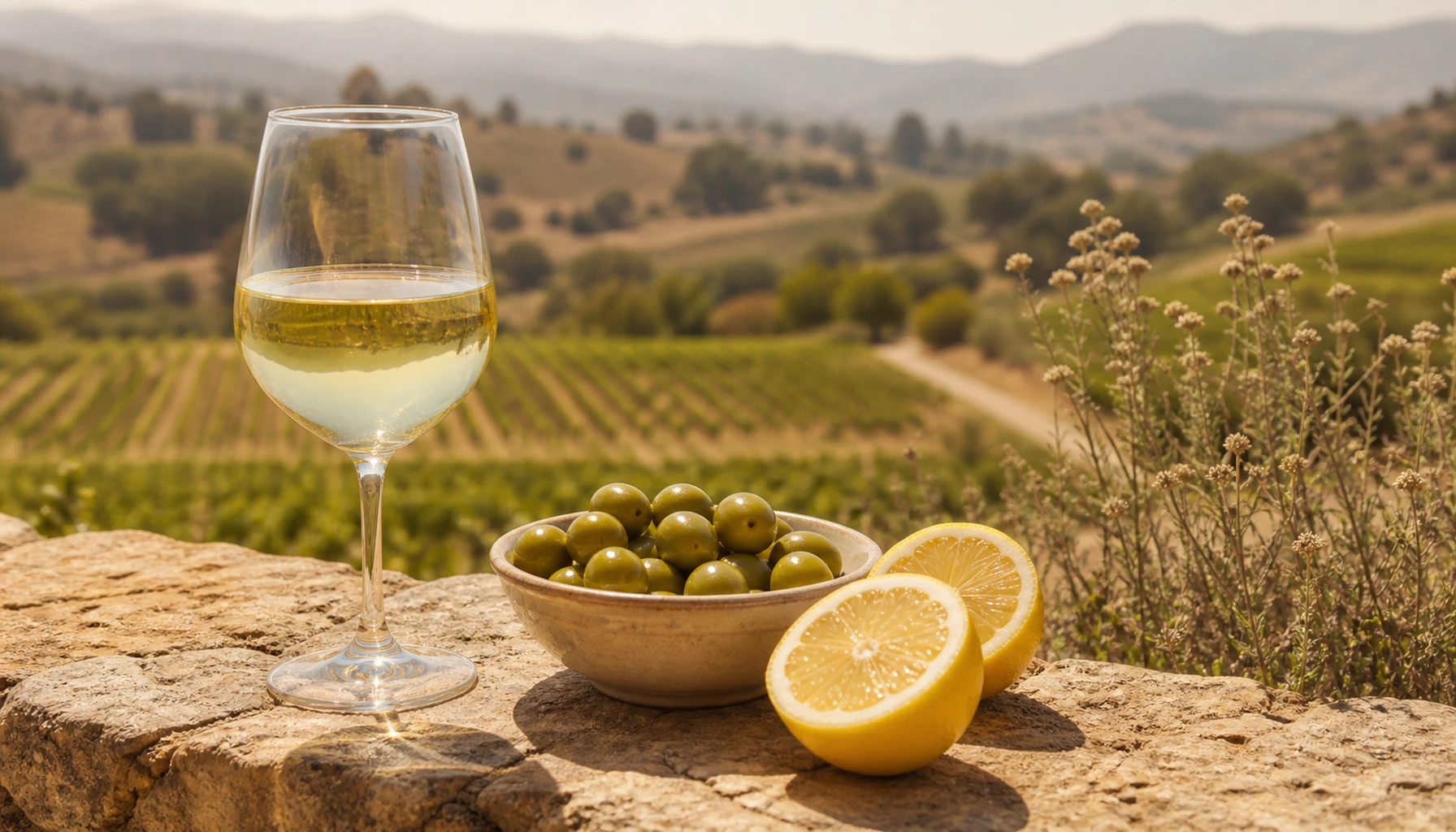
In the glass it starts where you expect a crisp white to start — lemon peel, green apple — and then goes somewhere most whites cannot follow: dried hillside herbs, white flowers, a distinctly saline edge, and a signature finish of raw almond, pleasantly bitter, that keeps the wine honest all the way down. Dry, medium-bodied, fresh without Sauvignon Blanc’s aggression — a white built more of herb and stone than of fruit basket.
The valley’s Italian logic — plant what treats heat as home — usually gets told through its reds, but Vermentino is the white that proves the rule, and it thrives here. Long hot days bring it all the way ripe; the evening air through the Rainbow Gap holds its freshness; and underfoot lies decomposed granite — a soil, as it happens, that the grape’s most serious old-world home would recognize at a glance. Its history is a sea story, and a good one.
How to drink it
The fresh school, served cold — and a finish you will learn to spot blind.
Most Vermentino, on its home coasts and here, belongs to the fresh school: steel tanks, cold ferments, bottled young and meant for the year in front of it. Richer versions exist — resting the wine on its spent yeast adds a rounder, nuttier register, and Sardinia’s Gallura hills show how serious the grape can get when someone insists — but freshness is its natural state, and a Temecula patio is the natural venue.
| The nose | Lemon peel, green apple, dried herbs off a warm hillside, a breath of sea air |
|---|---|
| The palate | Dry and medium-weight — bright without aggression, more herb and stone than fruit basket |
| The tell | A pleasantly bitter raw-almond finish — the grape’s signature. Notice it once and you will pick Vermentino blind for the rest of your life |
| Serve | Cellar-cool, about ten minutes out of the fridge — cold enough to refresh, warm enough to let the herbs speak |
| At the table | Anything that swims, anything under olive oil — on its home coasts it rarely meets a menu without fish on it |
Where to taste it in the valley
Follow the houses that bet the vineyard on Italy — the white side of the list got the same conviction.
Vermentino turns up where the Italian commitment runs deepest, and in Temecula that means three doors in particular.
-
Cougar Vineyard & Winery
All-Italian, grown on site
The valley’s purest Italian bet — the vineyard was planted for Italian varieties and the list declines to hedge, whites included. An informal room, owners usually present, and the closest Temecula comes to a Sardinian afternoon.
-
Mount Palomar Winery
Italian lean · vines since 1969
Plantings in the ground since 1969 — close to the valley’s beginning — and a house specialty that runs Italian, poured around a Mediterranean courtyard built for the long, slow midday a coastal white deserves.
-
Robert Renzoni Vineyards
Four generations · De Portola
Italian instinct four generations deep, poured against the southern trail’s defining view — the natural anchor for a De Portola day that wants its whites Italian.
Beyond the specialists, the Italian bench runs deeper than one grape — a handful of the Italian-leaning houses also pour a Pinot Grigio, lighter and quieter company — but Vermentino is the bottle worth hunting by name. And if the coastal-white itch outlasts the Italian lists, the Albariño at Masia de la Vinya answers it in Spanish, a deliberate turn off the quiet southern road that earns the detour.
Featured videos
Growers, sommeliers and one very devoted island — Vermentino explained, praised, and poured on film.
A grape that sailed
Nobody can quite say where Vermentino boarded its first ship — Spain and Liguria both get named, and the sea kept no manifest. What is certain: it settled every coast and island in the western Mediterranean, collected a new name at nearly every port, and planted its one top-tier appellation on Sardinian granite that a Temecula visitor would recognize underfoot. The whole voyage has a page of its own.