Zinfandel
The grape California adopted, raised, and made famous — brambly, peppery, and entirely unembarrassed about ripeness.
Every other great red on a Temecula list answers to a European homeland — Syrah to the Rhône, Tempranillo to Rioja, Sangiovese to Tuscany. Zinfandel is the one that grew up here. It arrived in America before California was a state, spent a century and a half as the state’s workhorse red, and kept its origins to itself the whole time — Italy pours the identical grape as Primitivo, and the birth certificate, when DNA finally produced one, pointed somewhere else entirely. That detective story has its own page; this one is about the wine.
And the wine is a straightforward pleasure. Blackberry and bramble by the bucketful, raspberry jam warmed at the edges, cracked black pepper, a swagger of warm spice — Zinfandel ripens further and franker than the composed company it keeps, and it wears that ripeness with its collar open. Where Cabernet asks to be taken seriously, Zinfandel asks what you are grilling.
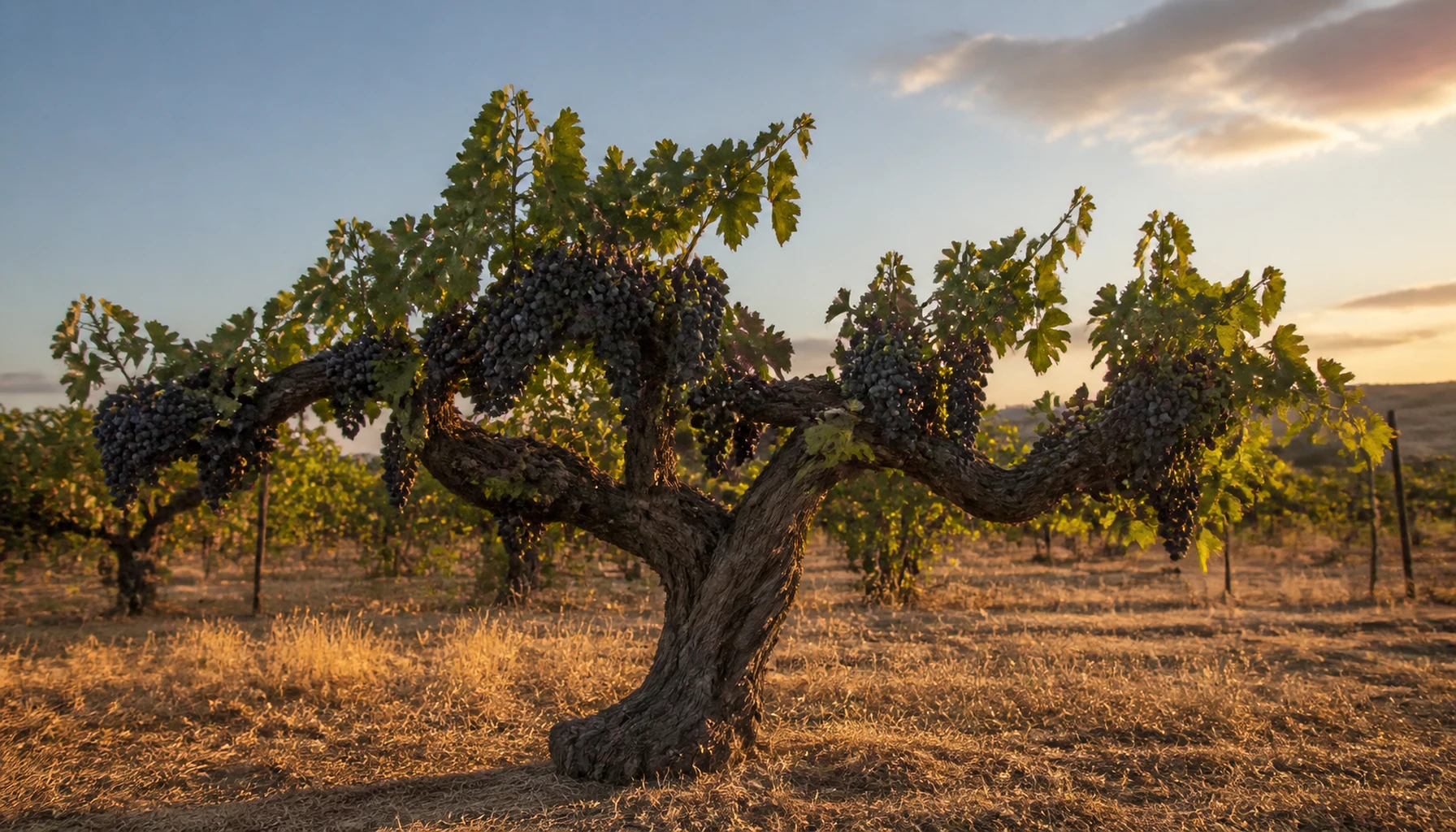
Few grapes enjoy a Temecula summer more. Zinfandel wants heat and plenty of it, and the valley’s long, bright days deliver exactly the full ripeness the style is built on — it is one of the classics that never left, and on lists around the valley it plays the one red at the bar with its top button undone.
How to drink it
Generosity is the style, not a flaw — but generosity repays a little management.
Zinfandel runs a wider style spectrum than its reputation admits. At one end sit brighter, brambly, peppery versions that stay light on their feet; at the other, late-picked bruisers stacked with jam, mocha and sweet oak. The grape ripens unevenly within a single cluster — raisins and tart berries side by side — which is half the secret of its character: fresh fruit and cooked fruit in the same sip, a contradiction the good versions turn into charm.
One honest warning: alcohol runs higher here than in most reds. All that sunshine becomes sugar, and sugar becomes proof. A properly cool glass keeps the warmth in balance, food absorbs the rest, and the dump bucket remains professional equipment — the tasting guide stands by all three points.
| The nose | Blackberry bramble, raspberry jam, black pepper, warm baking spice — ripe fruit announcing itself from a distance |
|---|---|
| The palate | Round, generous, softly tannic; fresh berries and cooked ones trading places through the finish |
| The proof | Alcohol runs higher than most reds — part of the style; pace yourself accordingly |
| Serve | Cellar-cool, 60–65°F and not a degree warmer — heat amplifies alcohol, and this grape brought plenty |
| At the table | Barbecue’s house wine: ribs, brisket, burgers, anything with char and sweet smoke on it |
Where to taste it
No shrine, no single address — Zinfandel works the whole valley instead.
No Temecula house has made Zinfandel its entire argument the way Cougar did the Italians or Baily the Bordeaux pair. It turns up instead as the loud, likable track on otherwise composed lists around the valley — which makes finding a good one less a matter of navigation than of asking. The question costs three words at any bar, and pourers tend to light up at it.
Temperament is a fair compass in the meantime. If Zinfandel’s scale is what you are after, Wiens Family Cellars has built its house on big, dark, unapologetic reds and makes no apology for the style — you will know within one pour whether you are home. And out on the back roads, Doffo pours small-lot reds with an intensity that keeps its bottles selling out — if something lands there, buy it the day you taste it.
Featured videos
Old vines, true believers and one very happy accident — California’s adopted grape on film.
Three names, one grape
Zinfandel reached America through East Coast nursery stock in the 1820s and ’30s, boomed in the Gold Rush, and spent the next century declining to say where it was born. The answer — delivered by DNA in 2001 — was a nearly extinct Croatian vine, with a Puglian double along the way and a pink accident in 1975 that saved the old vineyards. It is the best detective story in California wine, and it has its own page.