The history of Roussanne & Marsanne
A hermit’s hill above the Rhône, a partnership older than the paperwork, and a second home on the far side of the world.
Most grape histories are solo biographies. This one is a double act, and it has to be: for as far back as the records run, Roussanne and Marsanne have grown on the same slopes, gone into the same presses, and come out of the cellar wearing one name. Their shared home is a single steep hill above the river — Hermitage — and their story is mostly the story of that hill, the blend it perfected, and the long journey that eventually landed the pair on Temecula’s tasting lists.
It is also, quietly, a story about why blends exist at all — less romance than farming, as it turns out, though the romance came along later anyway.
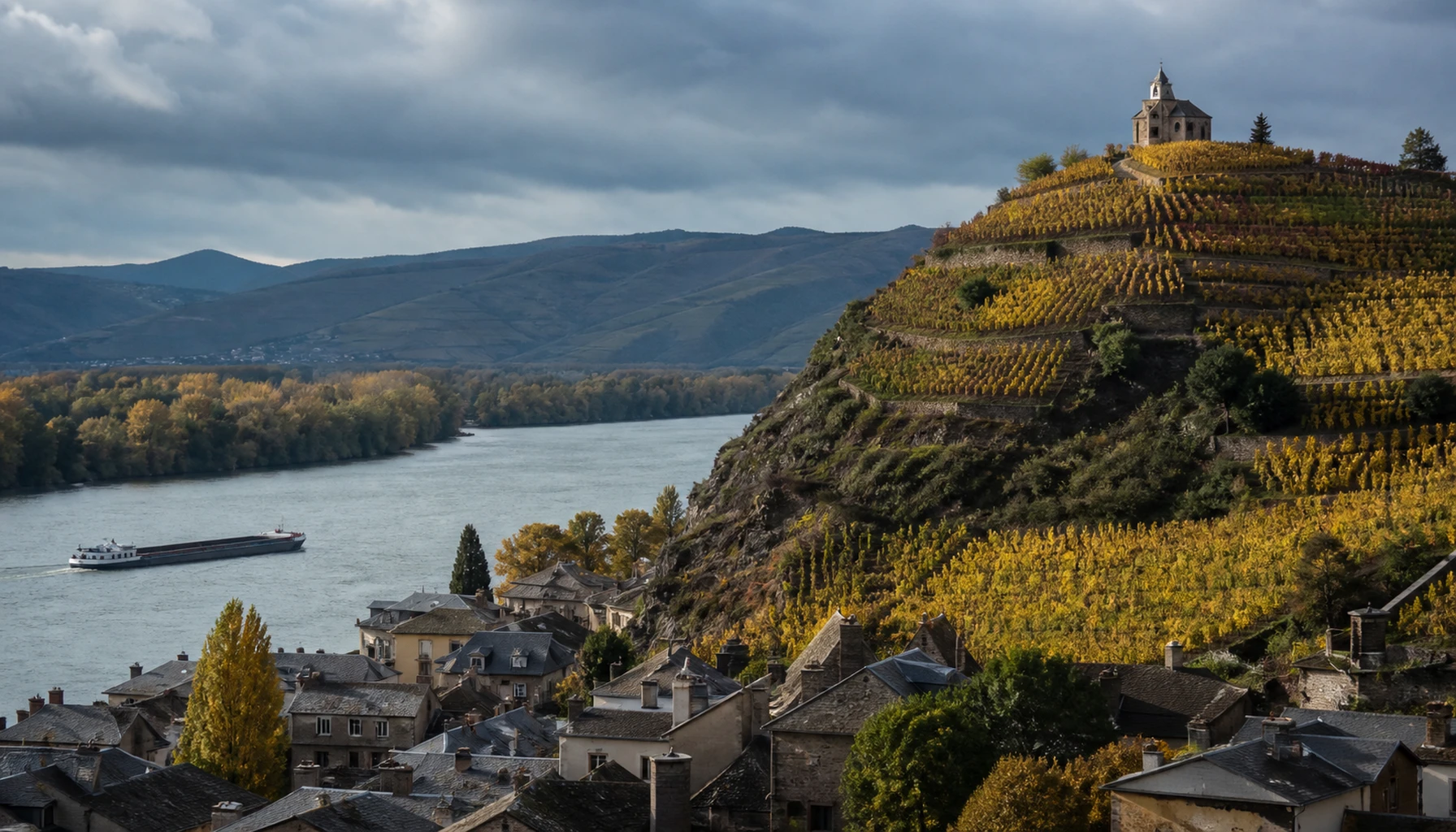
Hermitage & the northern Rhône
A knight who stopped fighting, a hill that never stopped growing wine.
The hill rises straight out of the town of Tain-l’Hermitage, a granite knuckle above a bend in the Rhône with a small stone chapel on its crown. The story the name preserves: a thirteenth-century knight, Gaspard de Stérimberg, came home from the wars, renounced them, and lived out his days as a hermit on the hilltop among the vines. However much of that is true, the wine took the hermit’s name, and the white version of it — Marsanne and Roussanne, blended — has been prized for centuries, at times as celebrated as the red grown beside it. The hill’s old luxury, a vin de paille made by drying the white grapes on straw mats until they surrender a honeyed sweet wine, survives there still.
Why a blend at all? Farming, mostly. Roussanne — named for the russet color of its ripe skin — is the finer and the fussier grape, ripening unevenly, sulking in wind, catching every mildew going; Marsanne bears generously and rarely complains. A vineyard planted to both hedged the harvest, and the cellar discovered what the field had forced: Marsanne’s body and Roussanne’s nerve are better company together than either is alone. The blend was insurance before it was style, and then it was simply how white Hermitage tasted.
The pair traveled outward the slow, old-world way. Marsanne crossed into Switzerland’s Valais, where growers still bottle it under the name Ermitage — the hill traveling with the grape. Roussanne climbed into the Savoie, where it goes by Bergeron around the village of Chignin, and earned a place in the white blends of Châteauneuf-du-Pape downriver. Wherever either grape went, the habit of partnership tended to follow.
Australia, California, Temecula
One grape found a second homeland; the pair found a second act.
Marsanne’s great emigration story belongs to Australia. The grape reached the state of Victoria in the nineteenth century and settled in as though it had never lived anywhere else — the Tahbilk estate there farms what are reckoned among the oldest Marsanne vines in the world, and Australia came to treat the grape as a quiet national specialty. It is one of wine’s better jokes: a blending grape from one French hill became a varietal star twelve thousand miles from home.
California’s chapter came later and arrived as a package deal. The Rhône Rangers — the growers and winemakers who spent the 1980s and 1990s arguing that the state’s warm hillsides were Rhône country at heart — brought in the whole white kit alongside their Syrah and Grenache: Viognier for the perfume, and this pair for the architecture. Where Rhône reds went in the New World, the whites followed.
Temecula is that argument continued by other means: a warm granite valley with marine-cooled nights, planted to the grapes that treat such weather as home. Here the pair stands just behind Viognier on the lists — sometimes named, often working uncredited inside a white blend — with the Rhône-leaning houses, Miramonte among them, the natural place to go looking. Centuries of partnership, still on the job.
Featured videos
The hill of Hermitage and the pair it raised — press play for the long version of a very old partnership.
Taste the partnership
The varietal page covers what each grape brings to the glass, how to taste for texture, and where the pair surfaces on Temecula’s lists — the working end of centuries of teamwork.