Syrah
Blackberry and black pepper, violets and woodsmoke — the dark grape Temecula’s granite seems to have been waiting for.
Syrah is the great red of the northern Rhône and the deepest-dyed of the world’s major grapes — small, thick-skinned berries that ferment into something closer to ink than to juice. Its signature is a double register you learn to spot in one sniff: fruit sweet and dark enough for dessert — blackberry, blueberry, black plum — laid over things that belong in a pantry rather than an orchard. Cracked pepper. Olives. Smoke. A whisper of cured meat. No other red runs both registers at once so confidently.
And few grapes change temperament with climate so completely. Grown cold, Syrah turns taut and savage — all pepper, iron and sinew, thrilling and a little austere. Grown warm, it relaxes into plush, dark-satin generosity. Temecula’s weather lands it in the happiest stretch of that spectrum: long hot days on decomposed granite ripen the tannin all the way to velvet, and the marine air sliding through the Rainbow Gap each evening keeps enough of the pepper and smoke to remind you what you’re drinking.
That balance is why Syrah is arguably the valley’s signature red. You will meet it two ways on local lists: bottled alone, and working as the dark heart of the GSM blends half the valley makes. Either way it is usually ready the afternoon you meet it — the house style here runs generous and early-drinking, with no decade of cellar homework attached.
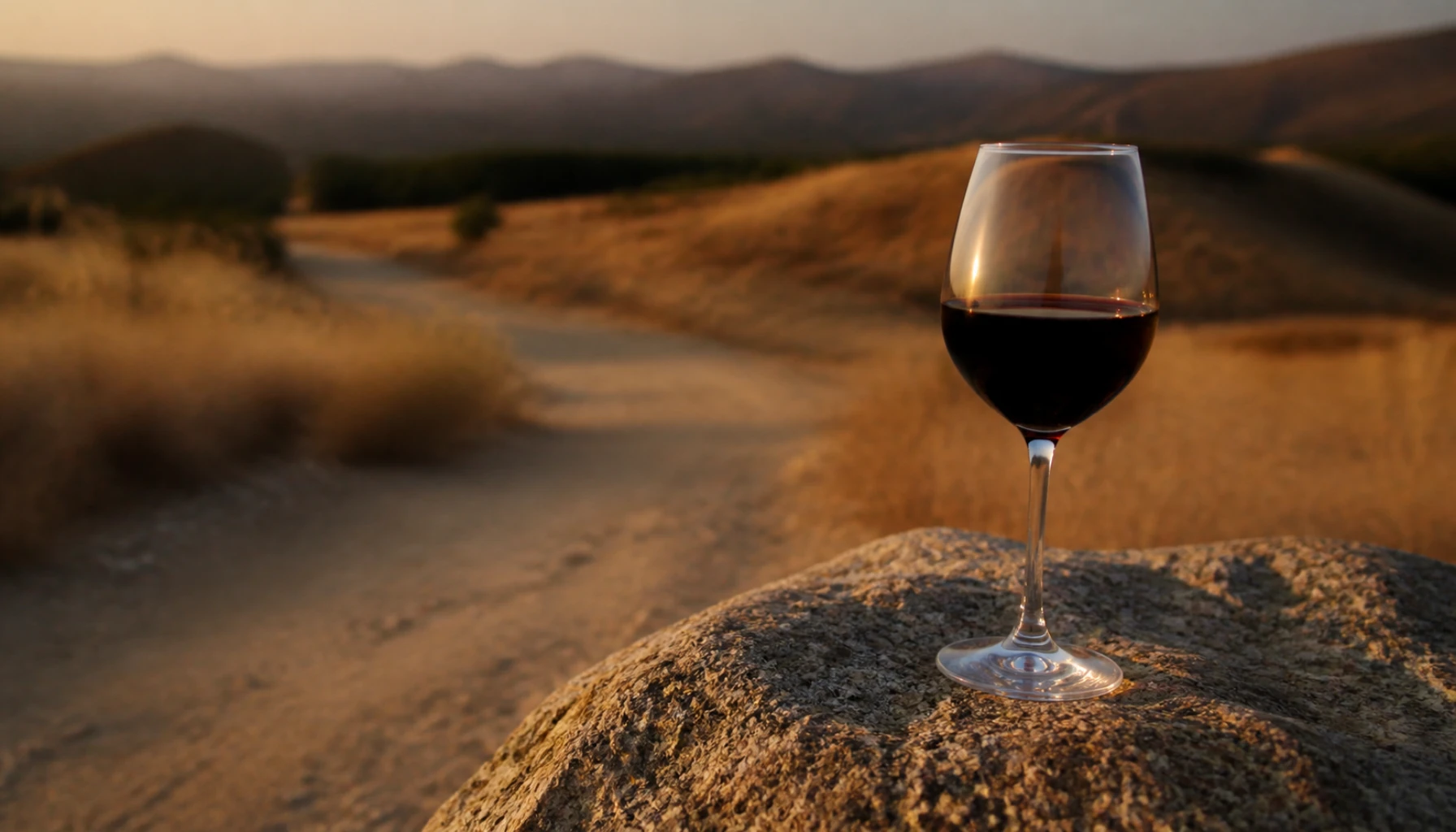
How to drink it
Plush is the local register, but the pepper is the point — here is how to catch both.
On a Temecula flight, Syrah arrives in the back half, and it should be the darkest thing on the table when it does — tilt the glass against the tasting sheet and the rim barely lightens. Give it more air than you gave anything before it. A young Syrah is a talker who needs a moment to warm up: the first sniff is often just “dark,” and the second, after a few lazy circles on the table, is where the violets and the pepper mill show up.
| The nose | Blackberry and violet up top; pepper, smoke and olive underneath — get your nose into the bowl and hunt for the second layer |
|---|---|
| The palate | Full-bodied and dark-fruited here, with tannin ripened soft; the savory register lives on the finish, so let each sip linger |
| Serve it | Cellar-cool, 60–65°F — on a 90-degree patio a few minutes of chill is a favor; warm Syrah goes soupy and boozy |
| At the table | Anything that met a grill or a pepper mill — steak, lamb, sausage, mushrooms; tannin turns silky beside char and fat |
Where to taste it in the valley
The proof pours at a handful of doors. Start with these.
Ponte grows an estate Syrah that ranks among the valley’s best, on a property large enough to hold gardens, a well-regarded restaurant and real weekend crowds without strain — taste first, then let lunch turn into an afternoon.
Out on the back roads, Doffo pours small-lot reds with an intensity that explains why its bottles sell out and stay sold out. If a Syrah is open the day you visit, buy on the day — and budget a few minutes for the MotoDoffo motorcycle collection, which is worth the drive on its own.
Miramonte has made Rhône varieties and a hillside terrace its whole argument, and usefully keeps pouring after most rooms wind down — the natural place to taste Syrah standing next to its blending partners.
Syrah also moonlights all over the valley as the dark middle of the GSM blends — and if blends as a species are your lane, Wiens Family Cellars has built its entire house on big, dark, unapologetic ones. The full map of doors lives in the winery guide.
Featured videos
Sommeliers, growers and Rhône pilgrims on the valley’s signature red — press play, pour something dark, settle in.
A grape with a detective story
For two centuries the world told itself Syrah rode in from Persia — the name did sound like Shiraz — or came home in a crusader’s saddlebag. Then, in 1998, a DNA lab called the bluff, and the true parents turned out to be two French country grapes so obscure their own villages had nearly forgotten them. It is a better story than the legends, and it ends on a granite valley twenty-two miles from the Pacific.