The GSM blends
Grenache brings the sunshine, Syrah the shadows, Mourvèdre the wild streak — the southern Rhône’s team effort, adopted valley-wide.
GSM is not a grape; it is a treaty. The initials stand for Grenache, Syrah and Mourvèdre, the three reds the southern Rhône has blended for generations on a simple theory: in genuinely hot country, no single grape does every job well — so you hire three specialists and let each one work its shift.
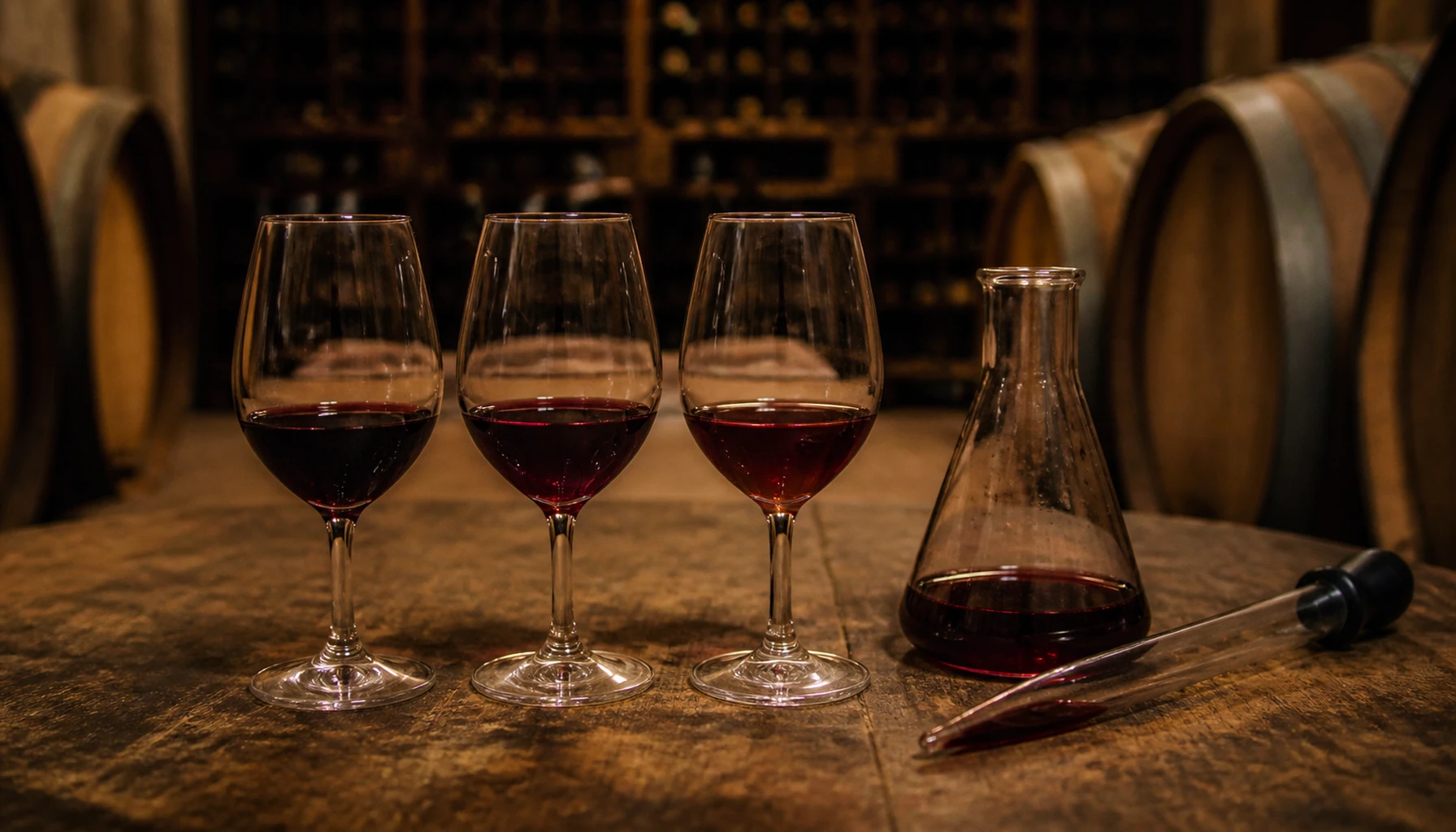
The shifts are easy to hear in the glass. Grenache is the sun: pale-rimmed, warm, all strawberry and raspberry with a faint glow of alcohol. Syrah is the dark: color, blackberry, black pepper, the structural spine. Mourvèdre is the wild card — a late ripener that wants the hottest ground and repays it in savory grip: leather, game, dried herbs, the flavor people reach for when they say a wine tastes like somewhere. Cinsault, when it appears, drifts through the margins softening the seams.
Temecula runs the same weather the blend was invented for — hot days on granite, ocean air after dark — which is why half the valley makes one. Expect bright red fruit riding over something meaty and half-wild, with tannin gentler than Cabernet’s: a wine that makes friends on the first sip and reveals its ambitions on the third. The blend’s dark middle has a solo career of its own, well worth meeting.
How to drink it
No fixed recipe, no two houses alike — which is precisely the fun.
There is no statutory formula. One cellar leads with Grenache and makes a red-fruited charmer; the next leans on Syrah and pours something closer to midnight; a third gives Mourvèdre its head and turns the whole wine savory. The initials on the label are a cast list, not a score — ask your pourer which grape leads, then taste for it. Comparing one house’s GSM against the next is one of the best games the valley offers.
| Grenache | The warmth — strawberry, raspberry and sun-baked spice; usually the biggest share, always the friendliest voice |
|---|---|
| Syrah | The dark middle — color, blackberry and black pepper; the spine the blend hangs its coat on |
| Mourvèdre | The wild streak — leather, game and dried herbs on the finish; the reason a friendly wine tastes serious |
| Cinsault & friends | The seasoning — soft red fruit smoothing the seams; a supporting few percent, felt more than tasted |
Serve it like any red here — cellar-cool, 60–65°F — and a Grenache-led blend even carries a slightly deeper chill with grace. At the table it is the most flexible red on the list: herby, grilled, stewed, roasted, spiced within reason. The blend grew up beside southern French cooking, and the whole design brief was dinner.
Where to taste it in the valley
Half the valley makes one — these doors make the argument best.
Miramonte has made Rhône varieties and a hillside terrace its whole argument, and usefully keeps pouring after most rooms wind down — the natural first stop for tasting the blend beside its component grapes.
Wiens Family Cellars built its entire house on big, dark, unapologetic blends — no white-wine hedge, no something-for-everyone flight — and one generous pour will tell you whether you have found your people.
To meet the lead grape traveling alone, make the deliberate turn to Masia de la Vinya, where Grenache pours under its Spanish passport as Garnacha. Spanish varieties are still thin on the ground in the valley, which is exactly what makes the hilltop detour worth it.
And the components keep their own files: Syrah’s solo act lives next door, and the full map of rooms is in the winery guide.
Featured videos
Growers and blenders on Grenache, Syrah and Mourvèdre — the marriage explained by its matchmakers.
A blend with a papal past
This recipe comes with paperwork. It was perfected around a castle the popes of Avignon kept in the fourteenth century, codified in 1936 as one of France’s first appellations, and its rulebook admits over a dozen grapes — led by one that is not French at all. The popes, the stones and the Spanish immigrant who runs the show: the whole story is next.