The history of Tempranillo
Named for arriving early, aged longer than almost any wine on earth — Tempranillo’s story is Spain’s, told in one grape.
The name is an affectionate diminutive of temprano — roughly, “the little early one” — coined by growers who noticed that this grape came ripe weeks before its neighbors. In the high country of northern Iberia, that earliness is not a curiosity, it is survival: the fruit gets in ahead of the autumn rains and the first mountain cold. An early grape from a hard place, in other words — and, in the great irony of its career, the raw material for some of the longest-aged wines in the world.
The story runs from those uplands through a nineteenth-century French remake, under half a dozen aliases, and — much later than you would expect — across the Atlantic to a Southern California valley that keeps Rioja’s hours.
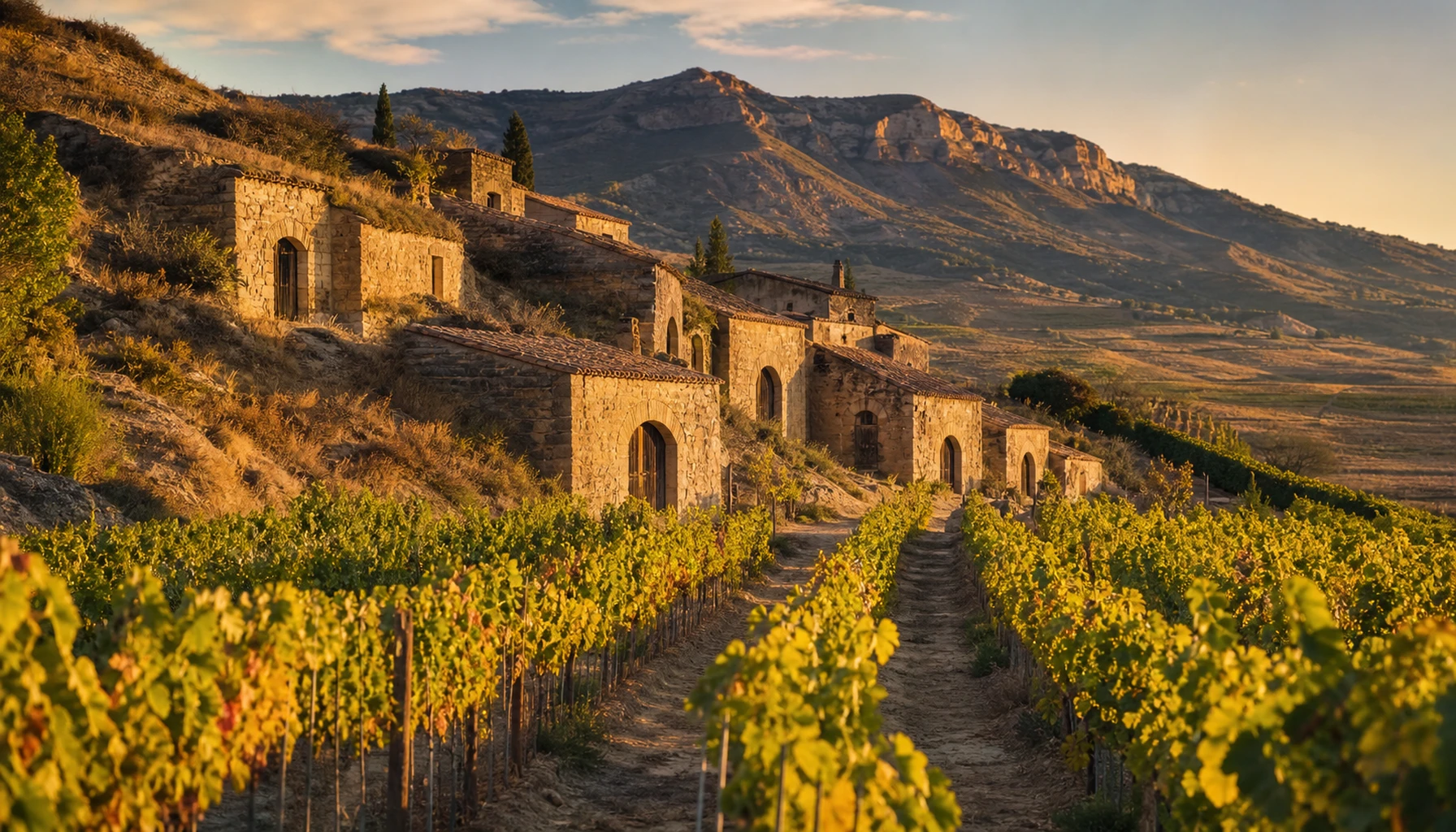
Iberia’s early riser
Hot days, cold nights, short autumns — the schedule that shaped the grape.
Tempranillo’s home ground is upriver Spain: the Ebro hills of Rioja, the high plain of the Duero. The climate there is continental and unsentimental — roasting afternoons, cold nights, an autumn that slams shut — and the grape is the country’s answer to it. Thick skins hold color and shrug off the sun; the cool nights bank the acidity the heat would otherwise spend; and the early ripening gets the crop into the cellar before the weather turns. Centuries of that schedule produced a red that is dark without being heavy, savory without being sour — composure you can bottle.
Spain, characteristically, never agreed on what to call it. Ribera del Duero pours it as Tinto Fino and Tinta del País; Toro as Tinta de Toro; La Mancha as Cencibel; and across the border in Portugal’s port country it works under the names Tinta Roriz and Aragonez. Same early grape, half a dozen passports — the surest sign of how long it has been everywhere on the peninsula.
Barrels across the Pyrenees
Phylloxera emptied Bordeaux’s cellars — and accidentally invented modern Rioja.
In the second half of the nineteenth century, the phylloxera louse ate its way through France’s vineyards, and Bordeaux’s merchants suddenly had orders to fill and nothing to fill them with. They looked south. Négociants and phylloxera refugees crossed the Pyrenees into Rioja hunting wine, and they did not travel light: they brought the small oak barrel, the cellar discipline, and the whole Bordeaux idea that a wine could be raised — not merely stored — in wood.
Tempranillo took to the treatment the way it takes to everything: gracefully. Long barrel aging became Rioja’s signature rather than Bordeaux’s loan, with American oak lending the region its trademark vanilla-and-coconut accent, and in time a whole ladder of aging terms — crianza to gran reserva — grew up to describe how long the early grape had been taught to wait. When phylloxera finally crossed the mountains too, the style had already set. The remake outlived the emergency that caused it.
To California, to Temecula
A century of obscurity, then a valley that keeps Rioja’s hours.
Tempranillo’s American century started quietly. California spent its formative decades imitating France, so Spain’s greatest red arrived without fanfare and stayed largely anonymous — planted here and there, rarely named on a label. Its later believers made a plain argument: the grape wants what Rioja’s high country has, real daytime heat with real nightly relief, and most of California’s famous districts are tuned to other weather.
Temecula, as it happens, keeps exactly those hours — granite hillsides at 1,500 feet, hot afternoons, and the Rainbow Gap delivering ocean air every evening. The grape has answered emphatically enough that it may be the single most rewarded grape in the valley: Ponte’s estate version and several from the quiet De Portola Trail are the proof, and Masia de la Vinya keeps it Spanish company with Garnacha and Albariño on a hilltop worth the detour. What it tastes like and how to drink it lives on the Tempranillo page.
Featured videos
Bodegas, barrels and the early grape — Tempranillo’s long story, told on film.
The short version
An early ripener from the Spanish uplands, restyled by French refugees, renamed by half of Iberia, and late to America — until it found a warm granite valley running Rioja’s schedule, and answered the way it always has. The next glass is the good part.