The history of Cabernet & Merlot
A chance cross in a seventeenth-century vineyard, a river with two banks, and a blind tasting that moved the capital of Cabernet.
Bordeaux is a port before it is a vineyard, and its wine was built the way port cities build everything: for shipping, for reliability, and with a hedge against bad luck. Blending several grapes into one wine was the original insurance policy — if one variety failed in a cold, wet year, another carried the vintage. Out of that practical habit came the most imitated red-wine partnership on earth.
The odd part, given the centuries of aristocratic polish since, is how much of the pair’s story turns on accidents: an unplanned cross between two vines, a price list drawn up in a hurry for a fair, and a publicity-stunt tasting that went badly wrong for its hosts. This page takes the accidents in order.
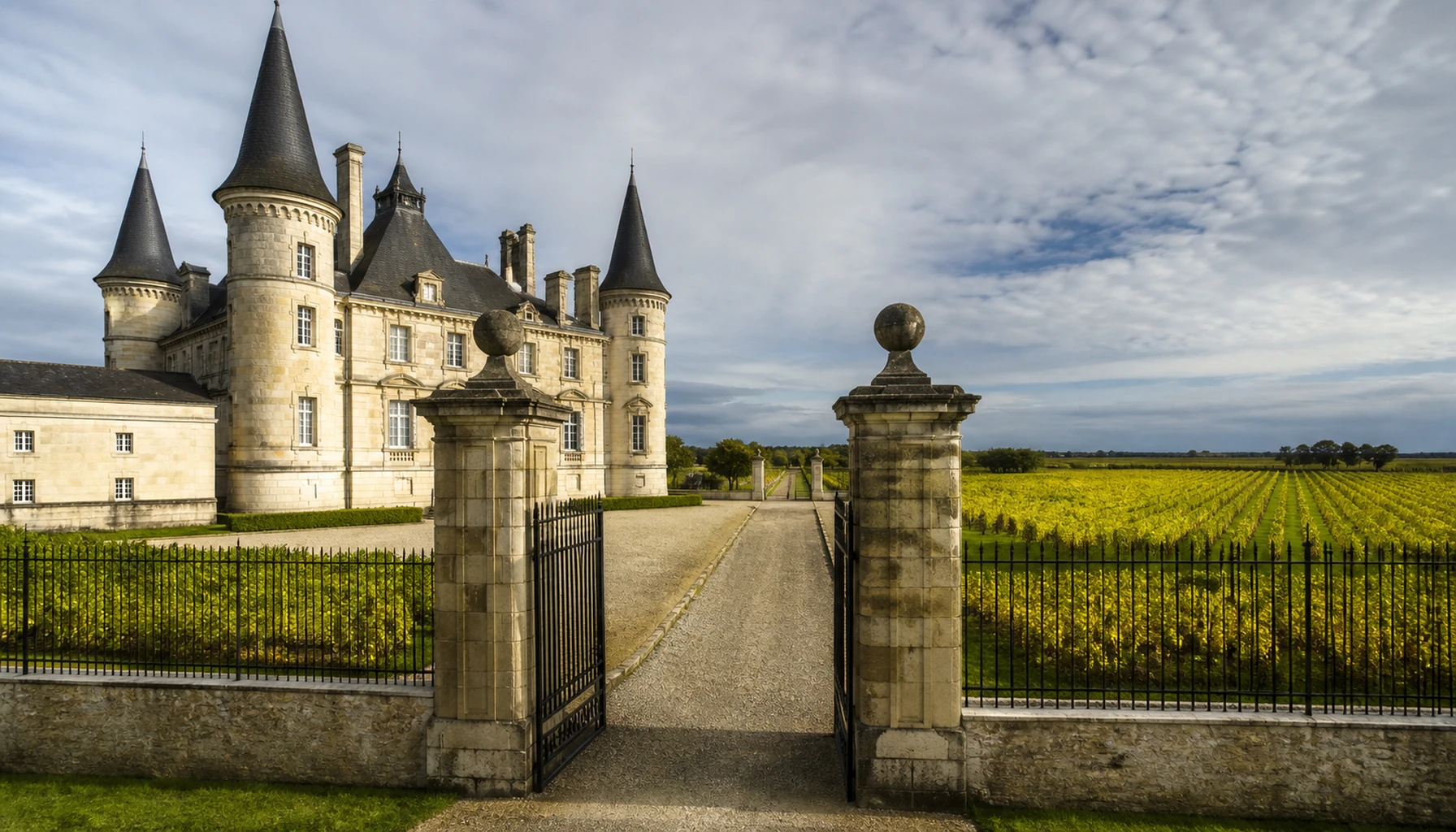
Two banks of one river
Gravel on one side, clay on the other — and a different grape wearing the crown on each.
A chance cross
For most of its life, Cabernet Sauvignon’s parentage was anyone’s guess. Then, in 1996–97, DNA work at UC Davis settled it: the world’s benchmark serious red is a natural cross of Cabernet Franc and Sauvignon Blanc — a red grape and a white one, meeting by chance in some seventeenth-century Bordeaux vineyard, with no one’s permission and to no one’s knowledge. The name, in hindsight, had been a birth certificate all along; it just took three centuries and a genetics lab to read it.
Gravel and clay
The Gironde estuary splits Bordeaux into two temperaments. On the left bank, the Médoc’s deep gravel beds drain fast and hold the day’s warmth — exactly what late-ripening Cabernet needs — so the left bank leads with Cabernet. The right bank’s cooler clays suit earlier-ripening Merlot, which rules there instead. Between them sits the pair’s working logic: the two grapes flower and ripen on different schedules, so planting both is weather insurance, and blending them turns the hedge into a style — Cabernet’s frame, Merlot’s flesh, one wine.
The 1855 ranking
When Paris staged a great exposition in 1855, Bordeaux’s brokers were asked for a ranking of the region’s estates and produced one the fastest way they knew — by decades of market price. The result, five tiers of Médoc châteaux, was meant as a trade fair document and became scripture: the 1855 classification is still recited today, and it built the hierarchy that made Cabernet-led claret the model every ambitious red region on earth would measure itself against.
The Judgment of Paris, and after
One blind tasting in 1976, and California stopped asking Bordeaux for permission.
California had grown the Bordeaux grapes since its earliest estates, always in Europe’s shadow. Then, in May 1976, a Paris tasting set California wines against famous French ones — blind, before a panel of French judges — and a Napa Cabernet finished first among the reds. The event became known as the Judgment of Paris, and its consequences outran anyone’s intentions: California claimed Cabernet as its own flagship, Napa built an empire on it, and the assumption that the Old World held the patent on greatness never quite recovered.
Temecula’s first vines were already in the ground by then — planted in the late 1960s, with the classics well represented — and while the valley eventually chose to lead with Rhône, Spanish and Italian grapes, Cabernet and Merlot never left. The local climate rewrites them gently: long warm days ripen Cabernet’s tannin all the way through, so the wines drink generous and early — Bordeaux’s architecture, without the decade of waiting rooms.
The pair’s local addresses are the valley’s quieter ones: Baily, which made Bordeaux-leaning estate bottlings its life’s work; Frangipani, pouring estate reds in the southern trail’s genuine quiet; and Monte De Oro, where the glass floor puts the barrel room under your feet while you drink what came out of it.
Featured videos
From Médoc gravel to a Paris tasting room — the pair’s lively paperwork, argued on film.
The pedigree, poured
Three centuries of accidents, rankings and judgments — and the practical conclusion fits in one glass, poured somewhere quiet between eleven and five.