Cabernet & Merlot
The two red names everybody arrives already knowing — and the warm valley pours them friendlier than their reputations.
No two red grapes are more familiar than these, and no two are more thoroughly a pair. Both come out of Bordeaux, where for centuries they have gone into the same bottles on purpose: Cabernet Sauvignon supplying the architecture, Merlot supplying the upholstery. Most of the world’s famous “Cabernet” has quietly been both grapes all along.
Apart, they are studies in opposite temperament. Cabernet is a small, thick-skinned berry that turns into a wine of blackcurrant, cedar and graphite, with the firm tannic grip that made it the world’s benchmark for seriousness — the grape you cellar, the grape that argues back. Merlot ripens earlier and rounder: plum, black cherry, a slide of cocoa, and a texture closer to velvet than to tweed. One builds the house; the other furnishes it.
In Temecula the pair never left — the valley simply stopped leading with them. Rhône, Spanish and Italian grapes headline here now, while Cabernet and Merlot hold the corner they have always held, and hold it well: long warm days ripen Cabernet’s famously stubborn tannin all the way through, so the local versions arrive with their arms already open — generous young, soft-edged, and entirely uninterested in making you wait a decade.
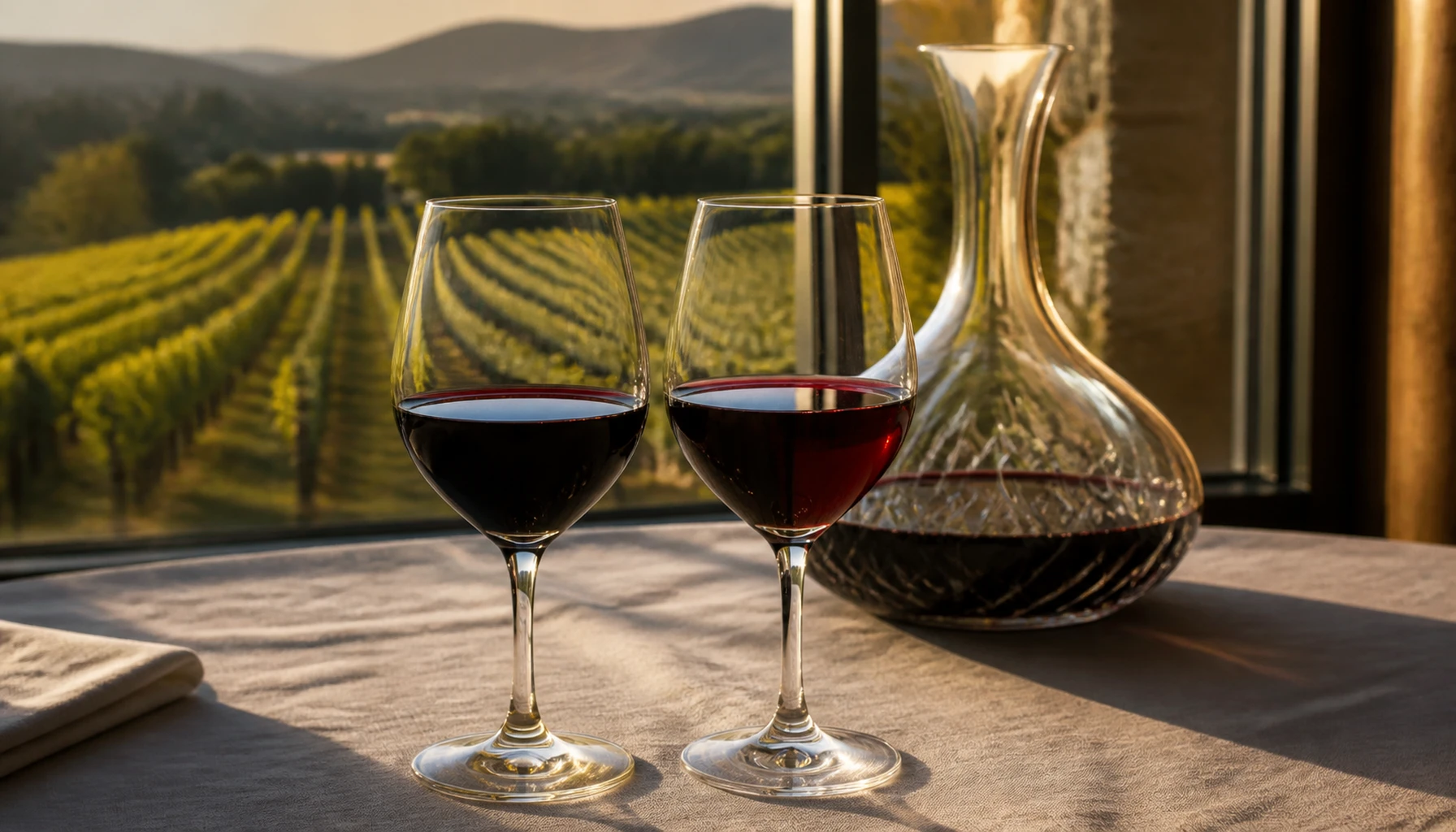
Two temperaments, one table
Telling them apart takes one sip and no vocabulary: Cabernet arrives with edges, Merlot with cushions.
On a flight, run the fingertip test: after a sip of Cabernet, your gums feel lightly sanded — that is tannin, the structural half of the grape’s appeal. Merlot leaves the same neighborhood of dark fruit but skips the sandpaper, which is why it has spent fifty years as the recommendation for people who “don’t like heavy reds” and why serious drinkers keep rediscovering that softness is not the same thing as simplicity.
You will also meet them together. When a Temecula list pours a Bordeaux-style blend, it is running the oldest play in the book — structure from one grape, flesh from the other, a wine neither quite makes alone. Taste all three across a flight and you have given yourself a small Bordeaux education for the price of one tasting fee.
| Cabernet Sauvignon | Blackcurrant, cedar, graphite; firm grip on the finish — the frame of the blend and the spine of the pair |
|---|---|
| Merlot | Plum, black cherry, cocoa; velvet where Cabernet is tweed — ready sooner and easier company |
| Blended | Bordeaux’s oldest trick: each grape covers the other’s gaps, and the seams disappear in the glass |
| Serve | Cellar-cool, 60–65°F — on a warm patio, a few minutes of chill is a favor to both of them |
| At the table | Tannin binds protein: steak, lamb, aged cheddar — the charcuterie board is applied science |
Where to taste it
The Bordeaux grapes live in the valley’s quieter rooms — which tells you something about who is drinking them.
No house is more identified with the pair than Baily, which has spent its whole run on Bordeaux-leaning estate bottlings without ever chasing a marketing moment. Ask someone who actually lives here where they drink and the name tends to arrive with a shrug, as though the answer were obvious — a reputation built at that speed is hard to fake. Expect a steady, unhurried room with regulars in it: the second-visit stop that quietly becomes the habit.
Down the quiet southern trail, Frangipani pours its estate reds in genuine quiet, at a property still sized to the family running it — whoever hands you the Cabernet likely has a direct stake in whether you like it. And at Monte De Oro you can drink the finished article while standing on a glass floor above the working barrel room where it did its time — the rare architectural gesture in wine country that actually earns itself.
If it is the blends that call you, Wiens Family Cellars has built its entire house on big, dark, unapologetic ones — no white-wine hedge, no something-for-everyone flight. You will know within one pour whether it is your kind of place.
Featured videos
Winemakers and sommeliers on the Bordeaux pair — press play, pour something dark, settle in.
An accident with an empire
Cabernet Sauvignon began as an unplanned seventeenth-century cross between a red grape and a white one — a secret it kept until DNA testing in the 1990s. Add a river with two banks, an 1855 ranking that built a hierarchy France still recites, and a 1976 blind tasting in Paris that rearranged California’s fortunes, and the pair’s paperwork turns out far livelier than their sober reputations suggest. The whole file has its own page.